Why does my roof leak only when it rains in Houston
A roof that only leaks during Houston rain is a roof with a hidden entry point. Here is why it happens, how to find it, and what repair costs in 2026.
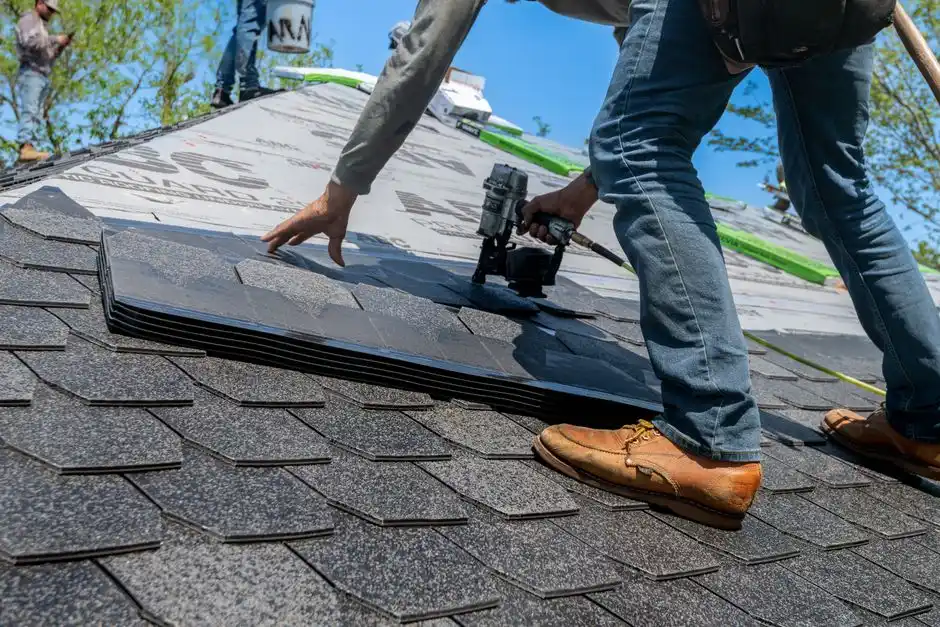
Your roof leaks only when it rains because the water is entering through a gap that stays dry the rest of the time - typically failed flashing, a lifted shingle, or a cracked pipe boot that only lets water in when wind pushes rain sideways against it. Houston's intense, wind-driven thunderstorms force water into places a light drizzle never reaches, so the leak stays invisible until the next downpour. Below we cover the exact entry points we find most often, how to trace a leak without tearing up your ceiling, and what roof leak repair costs in Houston in 2026.
Why a Houston roof only leaks during rain
A roof leak that only shows up during rain is almost always a water-entry problem, not a roof-wide failure. The roof deck and underlayment are doing their job most days. What fails is a detail - a seam, a penetration, a valley - that only gets tested when rain hits at the right angle and volume.
Houston gets roughly 50 inches of rain a year, and a lot of it arrives in short, violent bursts with 30-50 mph gusts. That wind is the difference-maker. Rain that falls straight down sheds off your roof the way it was designed to. Rain driven sideways at 40 mph pushes water uphill under shingle laps, behind siding, and into flashing joints that shed perfectly in calm weather.
Three conditions have to line up for the leak to appear:
- An opening - a lifted shingle, a cracked pipe boot, a rusted valley, a gap in step flashing.
- Wind direction - the storm has to push water toward that opening.
- Volume - enough rain fast enough that water pools or backs up instead of draining.
That is why you can go weeks without a drip and then get a stain on the ceiling after a 20-minute squall. The leak was always there. The storm just found it.
How to find a roof leak in Houston Texas
Finding a roof leak in Houston Texas starts inside the attic, not on the roof. Water travels along rafters, decking, and insulation before it drips through your ceiling, so the stain on your drywall is often 6 to 15 feet away from the actual entry point. Chasing the stain from above wastes time and leads to unnecessary shingle work.
Here is the sequence we use on every roof leak detection call:
- Map the stain. Measure from the nearest exterior wall and note which way the ceiling joists run. Water follows the low side.
- Get in the attic with a bright light. Look for dark water trails on the underside of the roof deck, rusted nail heads, and matted or stained insulation.
- Check the usual suspects. Pipe boots, chimney flashing, skylight curbs, valley metal, and any place a roof plane meets a wall.
- Run water. A helper on the roof with a garden hose, working bottom-to-top in 3-foot sections, will reproduce the leak in 10-20 minutes on most homes.
- Confirm with moisture readings. A pin meter or infrared camera shows exactly where the water is sitting.
If the trail leads to a plumbing vent, an AC condensate line, or a supply line running through the attic, the roof may not be the problem at all. We use Thermal Imaging Leak Detection Houston TX to tell the difference in about 30 minutes - a wet roof deck reads cold and wet, a leaking pipe reads as a narrow, linear signature.
The Houston-specific causes we see most
Houston's climate and building stock create a short list of repeat offenders. If your roof only leaks when it rains, odds are good it is one of these five.
1. Wind-lifted shingles and broken seal tabs
Asphalt shingles rely on a thermal seal strip to lock each course to the one below. After two or three summers of 95°F attic temperatures, that seal weakens. A 45 mph gust peels the tab up, and the next rain drives water straight under it. You will not see the damage from the ground - you have to get on the roof and lift the tab by hand.
2. Failed pipe boots and vent flashing
The rubber collar around a plumbing vent pipe cracks after 8-12 years of UV exposure. Once it splits, every rain that hits the pipe runs straight down into the attic. This is the single most common cause of a roof leak when it rains Houston TX homeowners call us about, and it is a $180-$350 repair.
3. Chimney and wall flashing
Step flashing and counter-flashing are metal, and metal moves. Thermal expansion opens a 1/8-inch gap at the mortar joint, and wind-driven rain finds it every time. We see this constantly on 1970s-1990s homes in the Heights, where brick chimneys meet low-slope shingle roofs.
4. Clogged valleys and debris dams
Pine straw, oak tassels, and shingle grit collect in roof valleys and behind chimneys. When rain hits hard, the debris acts like a dam and water backs up under the shingles - a leak that only appears during heavy rain and disappears once the roof drains.
5. Hail and wind damage from the last storm season
Even small hail bruises shingle mat and knocks granules loose. The damage does not leak immediately. It leaks three months later, after the sun has baked the bruised spot and the next storm pushes water through. If your roof leak repair after storm Houston claim is on your mind, get the roof inspected before you file - the adjuster will want the same evidence we collect.
What roof leak repair costs in Houston in 2026
Roof leak repair in Houston Texas runs $250 to $1,200 for most residential repairs in 2026, with the average sitting around $550. The price depends almost entirely on how hard the leak is to reach and how much material has to come up.
- Pipe boot replacement: $180-$350.
- Flashing repair (chimney, wall, skylight): $300-$700.
- Shingle repair, small area (under 100 sq ft): $350-$800.
- Valley rebuild or partial re-roof: $800-$2,500.
- Roof leak detection only (no repair): $150-$400.
Roof leak detection cost Houston TX homeowners pay is usually credited toward the repair if you hire the same company - we do that on every job. If the leak turns out to be a plumbing line in the attic rather than the roof itself, the fix falls under Plumbing Leak Detection Houston TX and prices are similar.
One number worth knowing: a missed roof leak that soaks attic insulation and drywall for a full season typically turns into a $3,000-$8,000 repair once you add mold remediation and drywall replacement. Fixing it at the roof is almost always the cheaper path.
Common mistakes homeowners make
The most expensive roof leak mistakes are the ones that hide the problem instead of fixing it. We see all of these every month.
- Sealing the ceiling stain and calling it done. Kilz and paint hide the evidence, not the water. The leak keeps running and the deck keeps rotting.
- Climbing on a wet roof. Houston roofs are slick for 24-48 hours after rain, and the granules on a 15-year-old shingle are basically ball bearings. Wait.
- Slapping tar or caulk on the wrong spot. Roofing cement over a lifted shingle does nothing if the water is entering 10 feet away at the flashing.
- Ignoring a small drip because it only happens twice a year. Every leak gets worse. The opening widens, the deck softens, and the repair price doubles.
- Filing an insurance claim before you know the cause. If the leak is from a worn pipe boot, most Houston policies treat it as maintenance and deny it. Get a professional diagnosis first.
If you are not sure whether the water is coming from the roof or from a supply line in the attic, we can sort that out fast. Our team handles Residential Leak Detection Houston TX across the Heights, Oak Forest, Garden Oaks, and Meyerland, and we tell you plainly which trade needs to make the repair.
When to call a professional
Call a professional when the leak reappears after a second rain, when you see sagging drywall or a bulging ceiling, or when you cannot find the entry point after one attic inspection. Those three situations almost always mean the leak is in a spot that needs a ladder, a hose test, and a moisture meter to confirm.
Leak Detection The Heights sends a technician who walks the roof, inspects the attic, and runs a controlled water test to pinpoint the entry before anyone touches a shingle. You get a written diagnosis and a flat repair price before work starts. If the leak turns out to be a pipe, a pool line, or a slab issue rather than the roof, we tell you that too - and we can handle it. Our Leak Detection Houston TX team covers the entire inner loop and most of Harris County.
Frequently Asked Questions
Why does my roof leak only when it rains in Houston TX?
Because the entry point only opens under wind-driven rain. Houston storms push water sideways at 30-50 mph into lifted shingles, cracked pipe boots, and flashing gaps that shed fine in calm weather. The leak exists year-round; only the storm angle and volume expose it.
How do I find a roof leak in my Houston home?
Start in the attic, not on the roof. Trace the water trail backward from the ceiling stain, then have someone run a garden hose on the roof in 3-foot sections from the bottom up. Most leaks reproduce in 10-20 minutes. If you cannot find it, a moisture meter or infrared camera will.
Who fixes roof leaks in Houston Texas?
A licensed roofing contractor handles shingles, flashing, and pipe boots. If the leak is actually a plumbing line, AC condensate, or pool line, a leak detection company should diagnose it first. We identify the source, then either repair it or hand you a written diagnosis for the right trade.
Does homeowners insurance cover roof leaks in Houston TX?
It depends on the cause. Sudden damage from hail, wind, or a fallen limb is usually covered. Leaks from worn pipe boots, aged flashing, or lack of maintenance are typically denied as maintenance. Get a professional diagnosis before you file so you know which category your leak falls into.
How much does roof leak detection cost in Houston TX?
Expect $150-$400 for a full detection visit in 2026, including attic inspection, roof walk, and a water test. Most Houston companies credit that fee toward the repair if you hire them for the fix. We do.
Get help with Leak Detection in Houston
If your roof only leaks when it rains, the fix is usually smaller than you fear - a pipe boot, a flashing joint, a handful of shingles. The key is finding the real entry point before water does more damage to your deck and ceiling.
Call Leak Detection The Heights at 832-839-4984 and we will trace the leak, show you exactly where it is, and give you a flat price to stop it.