Water bill jumped but no visible leak
We isolate the system and watch the meter to confirm a supply leak. Then thermal imaging and acoustic gear find it behind walls or under the slab. We mark it and repair it, so your next bill is back to normal.
Residential Leak Detection in Houston is how we find the water you cannot see, before it wrecks your floors, foundation, or water bill. If your meter spins with everything off, a wall feels warm, or the slab stays damp, we trace the source with thermal imaging and acoustic gear. We serve homeowners across Harris County, from The Heights to Bellaire, and we tell you what is leaking and what the fix costs before we start.
Tell us what is happening. Our local team will confirm your visit shortly.
Call Now 8328394984 → No spam. No obligation. Just practical help.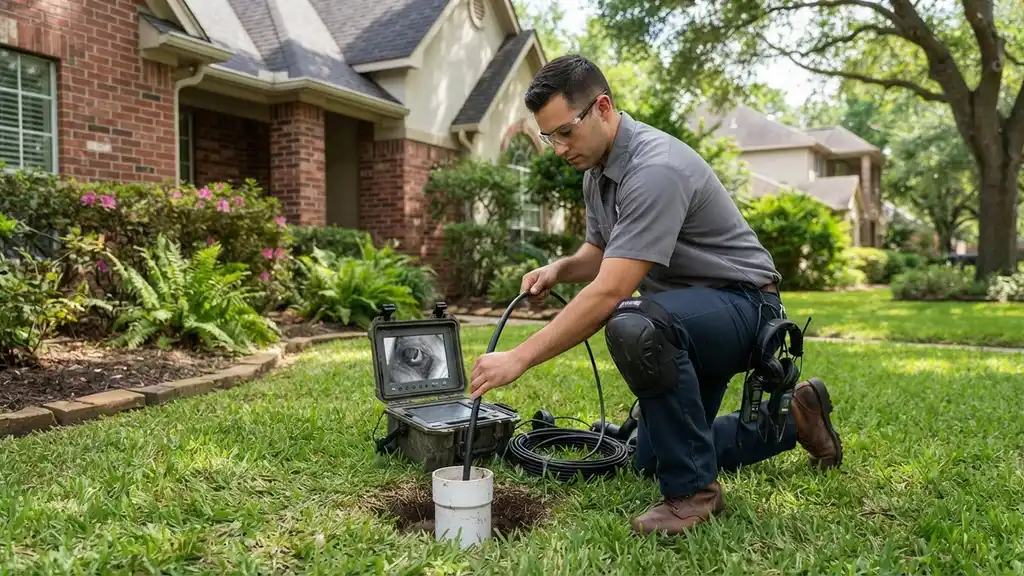
Residential Leak Detection in Houston is the process of locating hidden water leaks inside a home using non-invasive tools before any wall, slab, or yard gets opened up. We start by isolating the system: shutting off fixtures, watching the water meter, and pressure testing the line with a gauge. From there we sweep the house with a thermal imaging camera to spot temperature swings behind tile and drywall, then confirm with an acoustic listening device that picks up the hiss of pressurized water escaping a pinhole. You get a marked location, not a guess.
Houston homes give leaks plenty of chances. Clay soil shifts through our wet and dry cycles, which stresses copper pipe under slabs and at fittings. Summer attic heat bakes PEX tubing and supply lines. Freezes like the ones we saw in recent winters split pipes in garages and exterior walls. If you have been searching for residential Leak Detection Houston TX near me at 2 a.m. because you hear water running with every fixture off, that is exactly the call we take.
Every detection call includes the full non-invasive sweep and a written finding. If you approve the repair, we handle that too. Here is what is covered and what is not, so you know exactly what you are paying for.
We shut off every fixture and appliance and watch the water meter to confirm there is a pressurized leak. Then we isolate the irrigation, pool, and water heater lines to rule them out. This step alone often tells us which system is leaking.
We walk the house with a FLIR thermal imaging camera to spot temperature differences behind walls, under floors, and in ceilings. It is non-invasive and shows moisture patterns that are invisible to the eye. We photograph what we find.
Using a Sewerin acoustic listening device, we pick up the sound of pressurized water escaping a pipe. It works through concrete and drywall, which makes it ideal for slab leaks and underground lines. We narrow the location to within a few inches.
We isolate suspect lines and pressurize them with a hydrostatic test pump. If the gauge drops, there is a leak. This confirms the problem and tells us which segment is failing, so we repair the right section the first time.
We mark the leak location on the floor or wall with tape and give you a written summary: what is leaking, where it is, and what the repair involves. You can use it for insurance or a second opinion. No obligation to hire us for the repair.
We ask three questions: is water running with everything off, where do you see damage, and has the bill jumped. That tells us whether to treat it as an emergency or schedule a same-day visit. Most calls get a technician at the door within two to four hours.
We shut off every fixture and appliance, then watch the water meter. If the low-flow indicator still spins, you have a pressurized supply leak. We then isolate the irrigation, pool, and water heater lines one at a time to rule them out. This step takes about 20 minutes.
We walk the house with a thermal imaging camera and an acoustic listening device. The camera shows temperature differences behind walls and under floors; the acoustic gear picks up the sound of escaping water. Together they narrow the leak to a small area without cutting anything open.
Once we have a suspect spot, we confirm it with a pressure testing gauge or a tracer gas detector on hard-to-hear lines. We mark the location on the floor or wall with tape and photograph it. You see exactly where the problem is before we discuss repair.
If you approve the repair, we fix the line and retest the system to confirm it holds pressure. We clean up and walk you through what we did. Most repairs are done the same day, and we leave the area dry and ready for flooring or paint.
Purpose-built equipment, used by trained technicians — so the job is done accurately the first time.
Shows temperature differences behind walls and under floors to reveal hidden moisture. Non-invasive and fast.
Picks up the sound of pressurized water escaping a pipe through concrete and drywall. Ideal for slab leaks.
Goes inside drain and sewer lines to find cracks, root intrusion, and blockages. We see the problem directly.
Pressurizes a line to confirm a leak and identify which segment is failing. Essential for slab and underground lines.
Introduces a safe gas into a line and detects where it escapes. The most accurate method for hard-to-hear leaks.
Measures moisture content in walls, floors, and ceilings. Confirms the extent of water damage and tracks drying.
Senses moisture and the sound of escaping water. Useful for quick checks in finished spaces.
A homeowner in The Heights noticed a warm spot on the kitchen floor and a water bill that jumped from $60 to $220. Two plumbers had guessed but not found the leak. The slab was staying damp, and the hardwood was starting to cup.
We used thermal imaging and acoustic gear to pinpoint a hot water line leak under the slab, 14 inches from the wall. We opened a 2-foot section, repaired the copper pipe, and retested. The bill dropped back to $65 the next cycle, and the floor dried out.
A family in Katy woke up to water pouring through the ceiling after a hard freeze. The attic supply line had split. They shut off the water and called us at 6 a.m. The ceiling was sagging and insulation was soaked.
We arrived within two hours, found the split in a PEX line, and repaired it with a new fitting and section of tubing. We pressure tested the line and confirmed it held. The ceiling dried out with fans, and we replaced the damaged drywall section.
A homeowner in Clear Lake was adding water to the pool every day. The water bill was up $90 a month, and the pool deck had a soggy spot. They suspected a leak but could not find it.
We pressure tested the pool plumbing and found a crack in the return line under the deck. We repaired the line without draining the pool and retested. The pool stopped losing water, and the bill returned to normal.
Most leaks do not announce themselves. They show up as a higher bill, a damp spot, or a sound you cannot place. Here are the problems we solve every week.
Ask a pro →We isolate the system and watch the meter to confirm a supply leak. Then thermal imaging and acoustic gear find it behind walls or under the slab. We mark it and repair it, so your next bill is back to normal.
We trace the moisture to its source, which is often several feet from the stain. We repair the line and dry the area. You get a photo record of the leak for your insurance claim if needed.
We use acoustic listening to pinpoint the sound. It is the fastest way to find slab leaks and underground line breaks. We confirm with pressure testing, then repair and retest the line.
We confirm with thermal imaging and pressure test the hot water line. Once located, we repair the line with copper or PEX and retest. Most slab repairs are done in one day.
$180 - $450 for detection; repairs quoted separately
Most residential leak detection calls in Houston run $180 to $450, with the average around $275. That covers the full non-invasive sweep, system isolation, and a marked location. If you approve the repair, we credit part of the detection fee toward the work. Slab leaks and underground lines can run higher because they take longer to trace. We give you the exact price before we start, so there are no surprises. Affordable residential Leak Detection Houston TX means no wasted labor and no unnecessary demolition.
Finding the leak is the hard part. Once we know where it is, the repair is usually straightforward and affordable. Our pricing reflects the equipment and experience required to locate leaks without tearing up your home.
A visible fixture leak is quick and inexpensive to find. A slab leak or underground line leak takes longer and requires more equipment, so the detection fee is higher. We tell you which category you are in when you call.
Leaks in open crawlspaces or attics are easier to access. Leaks under tile or thick concrete take more time. We use thermal imaging to minimize the area we need to open, which keeps the cost down.
Homes with multiple zones, irrigation systems, and pools take longer to isolate. We test each system to rule it out. That adds time but prevents us from missing the real source.
After-hours and emergency calls carry a higher rate. If you can wait for a same-day appointment during business hours, you will pay less. We are available 24/7 for true emergencies.
“Our water bill doubled and we could not find the leak. Leak Detection The Heights came out the same day, used a thermal camera, and found a slab leak under the kitchen in about an hour. They marked it, repaired it, and retested. Bill is back to normal. Worth every penny.”
Maria G.Homeowner, The Heights
✓ Verified“I called at 11 p.m. with water coming through the ceiling. They had a tech here in under two hours. He found a cracked supply line in the attic, fixed it, and cleaned up. No drama, no upsell. Just fixed it. I have already recommended them to two neighbors.”
David R.Homeowner, Bellaire
✓ Verified“We had a mystery leak that two other plumbers could not find. These guys used acoustic gear and tracer gas and pinpointed a pinhole in a copper pipe behind the shower. They opened a 12-inch section, repaired it, and patched it. No mess, no guesswork. Honest pricing too.”
Priya S.Homeowner, West University Place
✓ VerifiedMost residential leak detection calls in Houston run $180 to $450, with the average around $275. That covers the full non-invasive sweep, system isolation, and a marked location. If you approve the repair, we credit part of the detection fee toward the work. Slab leaks and underground lines can run higher because they take longer to trace. You get the exact number before we start.
Start by shutting off every fixture and watching your water meter. If the low-flow indicator still spins, you have a supply leak. Then check the usual suspects: toilet flappers, under-sink cabinets, the water heater pan, and the irrigation valves. If nothing shows, the leak is likely behind a wall or under the slab, and you need thermal imaging and acoustic gear. That is when to call us.
Leak Detection The Heights offers residential leak detection across Houston and Harris County, with 24/7 emergency response and same-day appointments. We are a state-licensed plumbing contractor, founded in 2013, and we use FLIR thermal cameras and Sewerin acoustic units on every call. We serve the Heights, Montrose, Bellaire, West University Place, and the surrounding neighborhoods.
It depends on the cause. Most Houston policies cover sudden, accidental damage like a burst pipe, but exclude long-term seepage and maintenance issues. The detection itself is usually out of pocket, while the resulting water damage may be covered. We document the leak with photos and a written finding you can submit with your claim. Call your adjuster before authorizing major repairs.
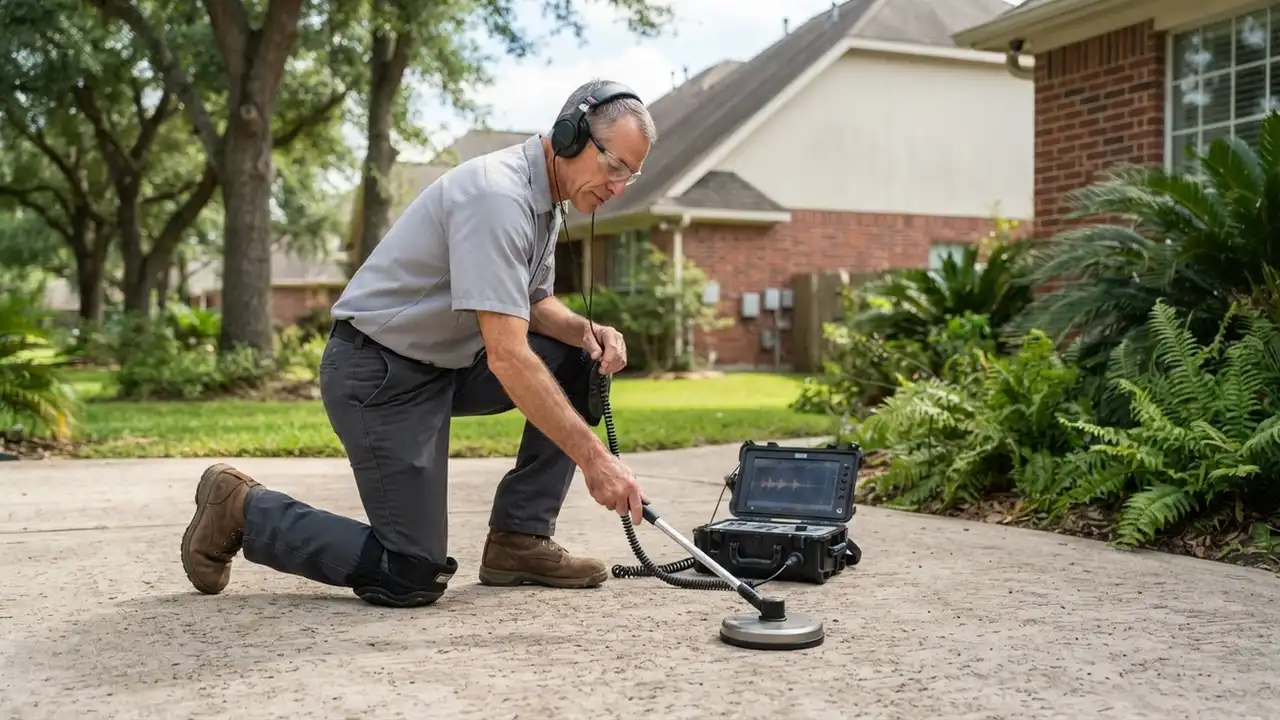 Slab Leak DetectionSlab leaks are the most common reason Houston homeowners call us. We use acoustic listening and thermal imaging to pinpoint the break under your foundation, then repair with minimal concrete removal. Catching it early protects your foundation from the clay soil movement that causes cracks and sticking doors.Explore →
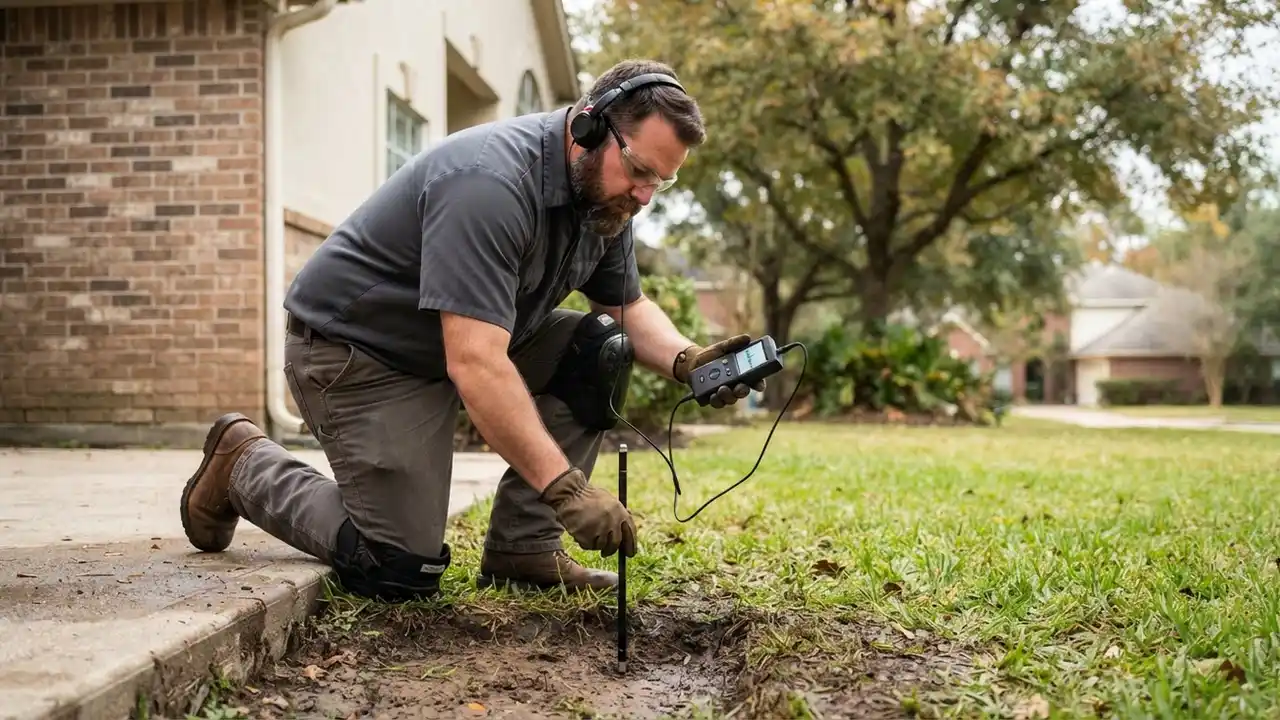 Foundation Leak DetectionWhen water is undermining your foundation, you will see cracks in brick and uneven floors. We trace the source and separate plumbing leaks from drainage issues. Fixing the leak stops the soil from shifting further, which is far cheaper than a foundation repair.Explore →
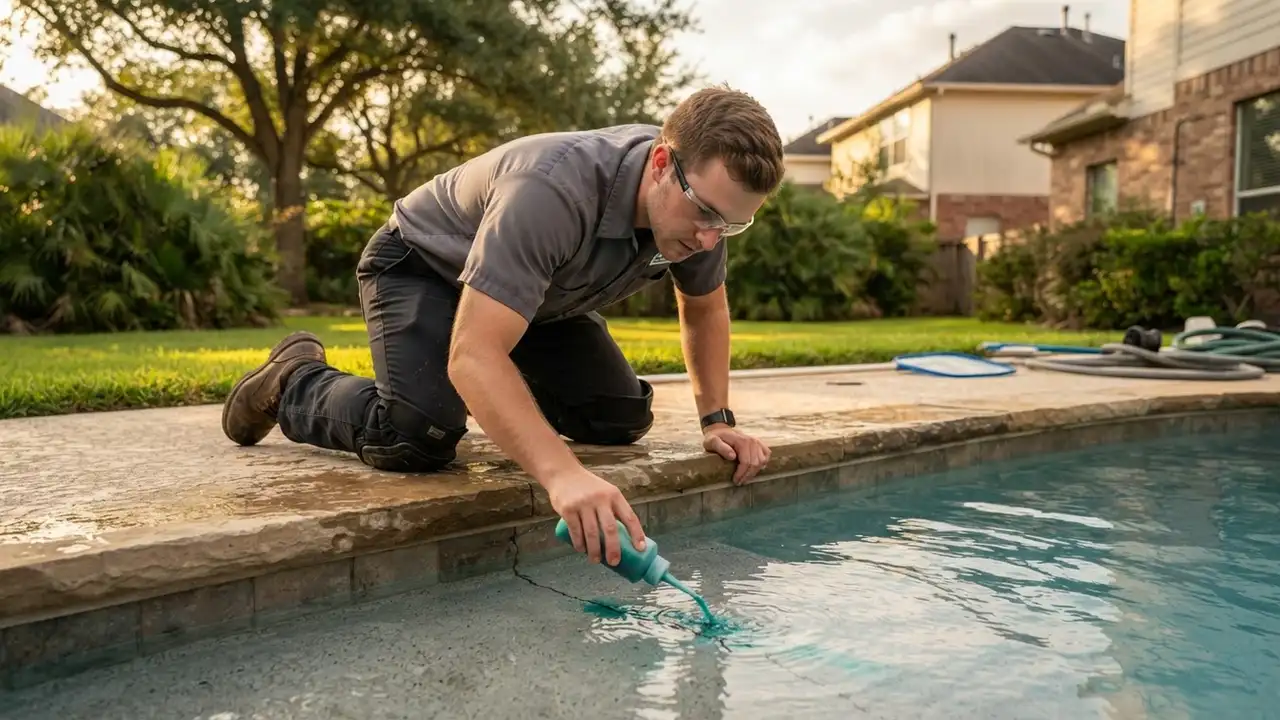 Pool Leak DetectionA pool losing an inch of water a day is not evaporation. We pressure test the plumbing, check the skimmer and light niches, and use dye testing to find the breach. Houston's shifting soil and tree roots are hard on pool lines, and we repair them without draining your pool.Explore →
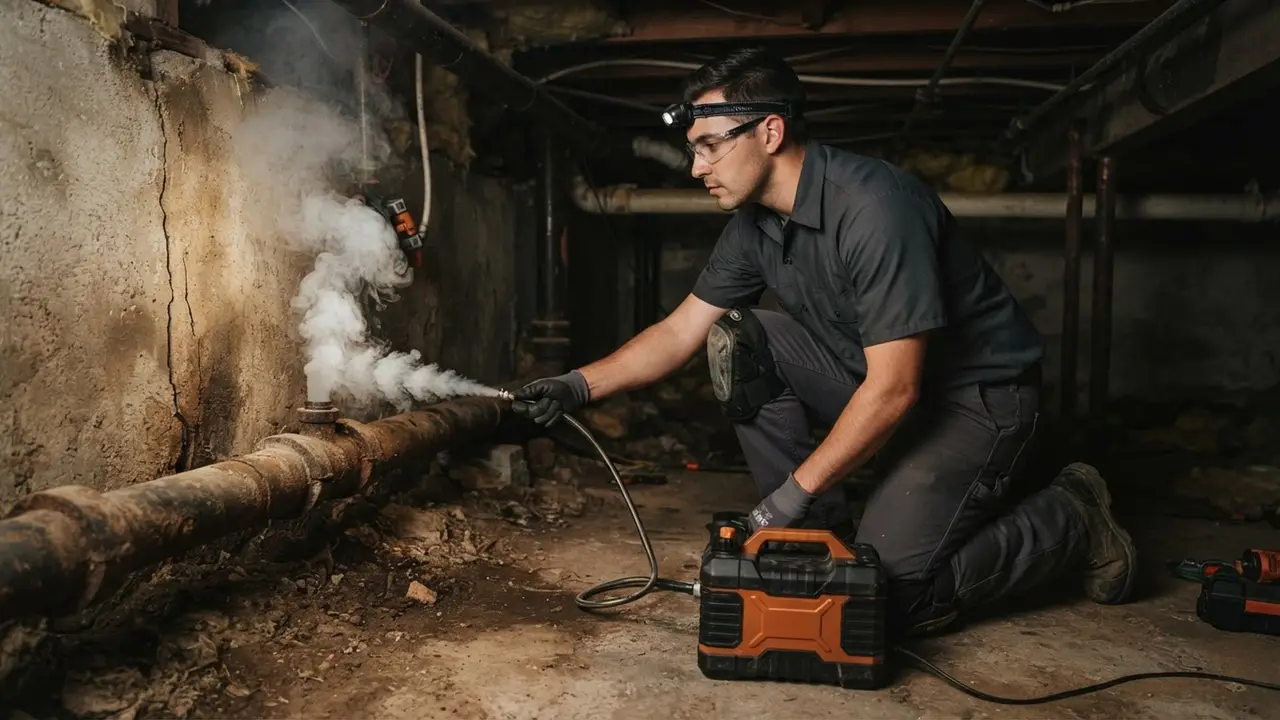 Sewer Line Leak DetectionSewer leaks show up as backups, soggy spots in the yard, and that smell you cannot place. We run a pipe inspection camera through the line to find root intrusion, cracks, or bellies. Then we recommend the right fix, from spot repair to full replacement.Explore →
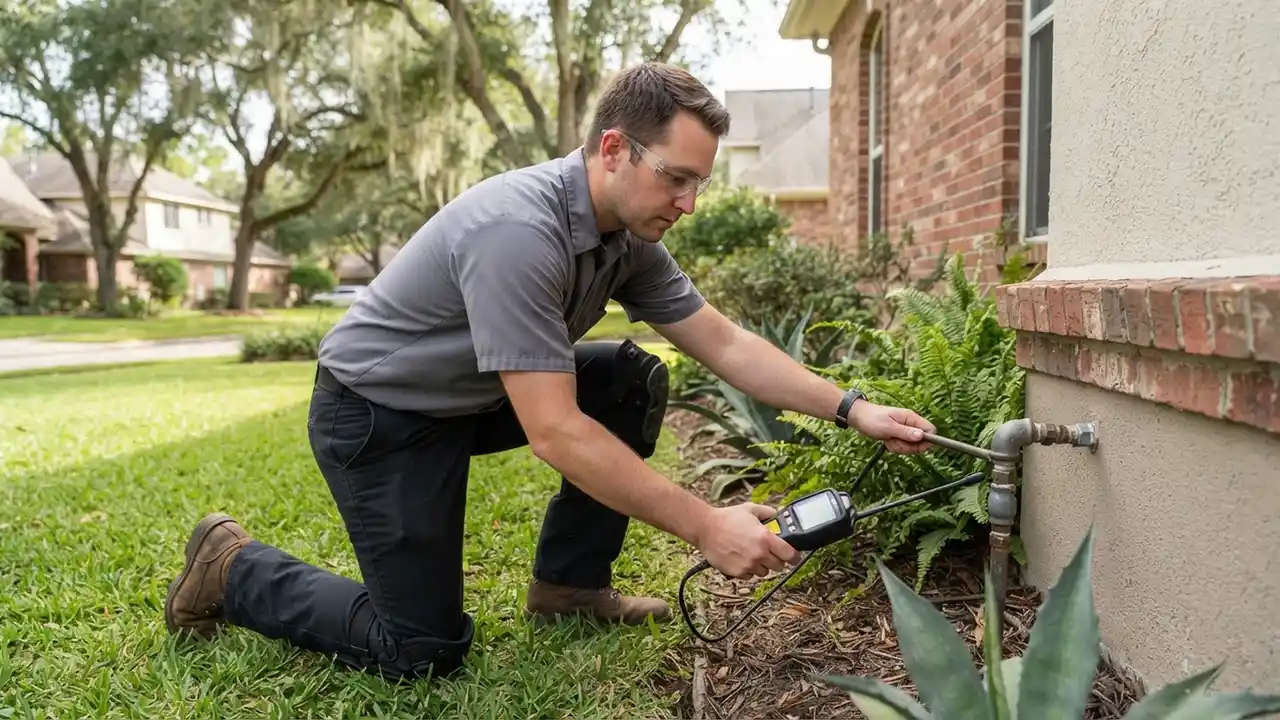 Gas Leak DetectionIf you smell gas, leave the house and call us. We use a tracer gas detector and pressure testing to find leaks in gas lines, appliances, and fittings. We make the repair code-correct and retest the whole system before we turn the gas back on.Explore →
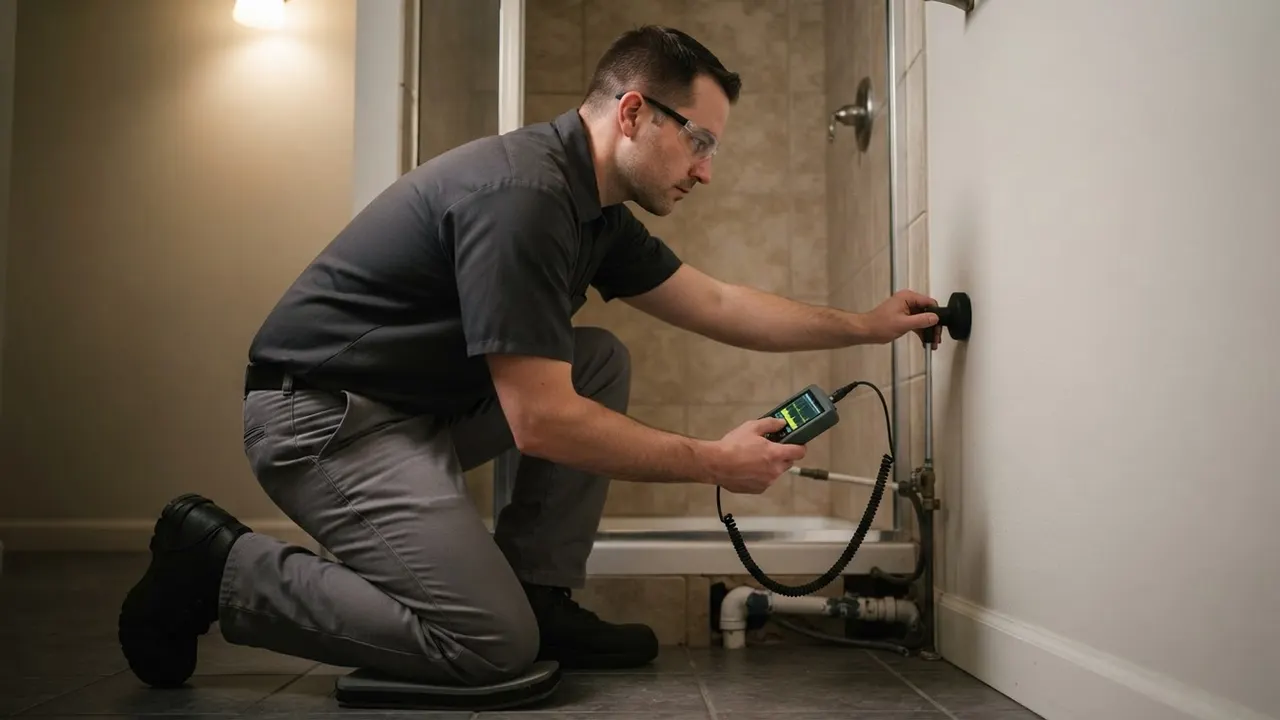 Plumbing Leak DetectionSupply lines, drain lines, and fixtures all develop leaks over time. We isolate the system, test each segment, and find the source without tearing up your home. Whether it is a pinhole in copper pipe or a failed fitting, we locate and repair it.Explore →
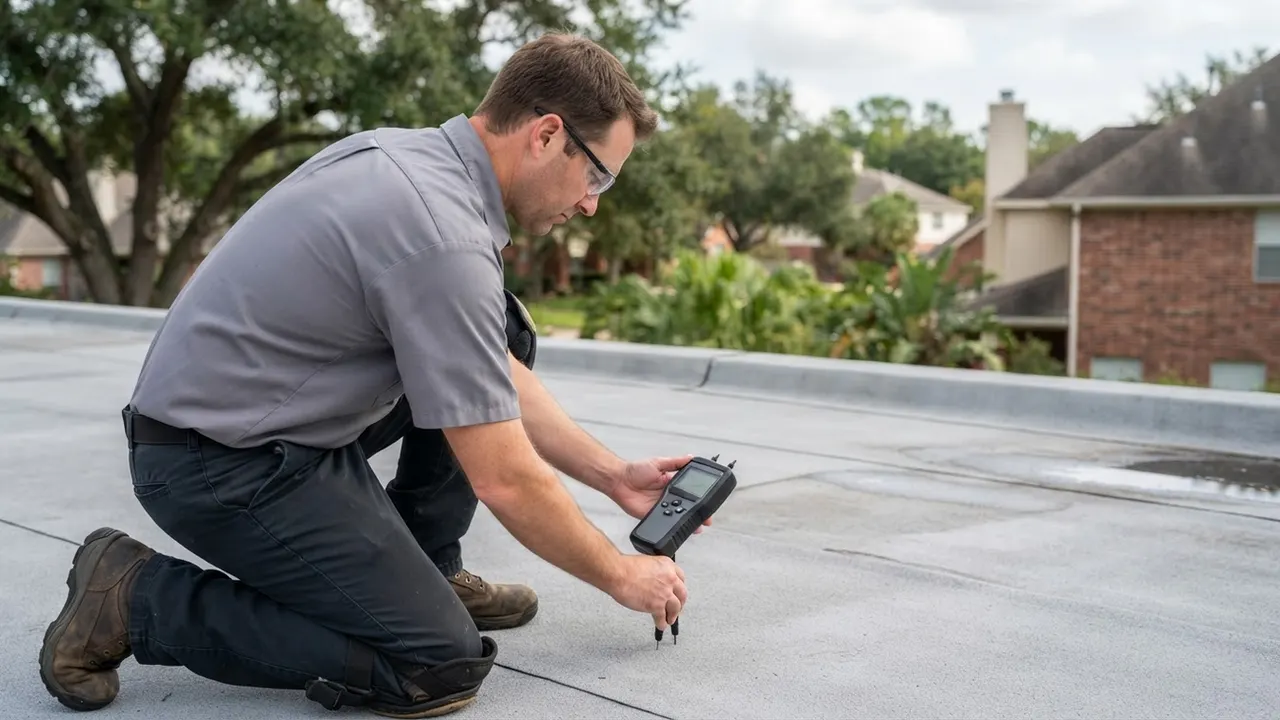 Roof Leak DetectionRoof leaks after a Houston storm can mimic plumbing leaks. We check the attic, ceiling stains, and flashing to separate the two. If it is a roof issue, we tell you; if it is plumbing, we fix it. No guesswork, no unnecessary roof work.Explore →
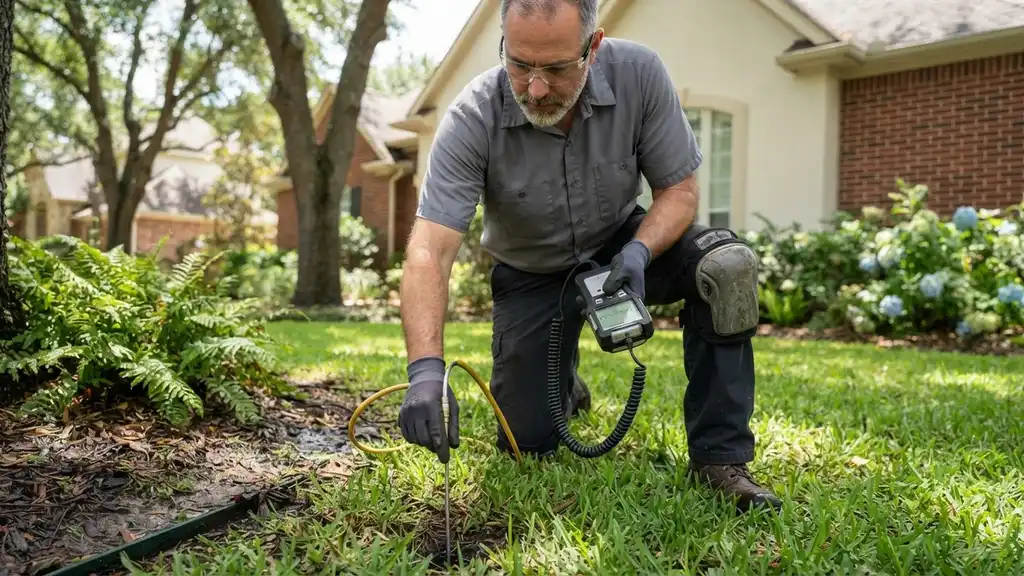 Irrigation System Leak DetectionA broken sprinkler valve or line can waste hundreds of gallons a week and spike your water bill. We isolate the irrigation zone, pressure test it, and find the break. Repairs are usually quick and inexpensive compared to the water you are losing.Explore →
Water is running somewhere it should not. We can find it and stop it. Call now for same-day service across Houston and Harris County. Our technicians arrive with thermal imaging and acoustic gear, ready to locate the leak and give you a straight answer.
Call Now 8328394984 →Call us at 832-839-4984 or send an email and we will get back to you fast. We answer the phone 24/7 for emergencies and schedule standard detections same day or next day across Houston and Harris County. Tell us what you are seeing and we will give you a flat detection price over the phone.