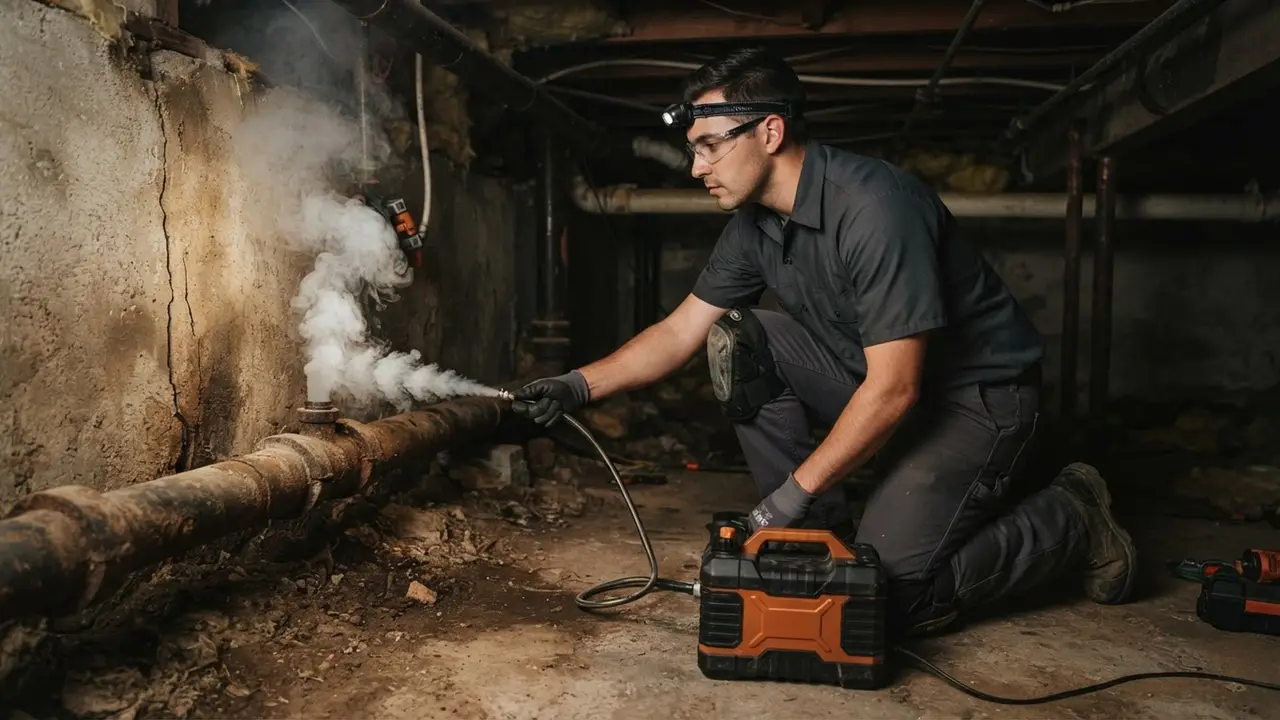
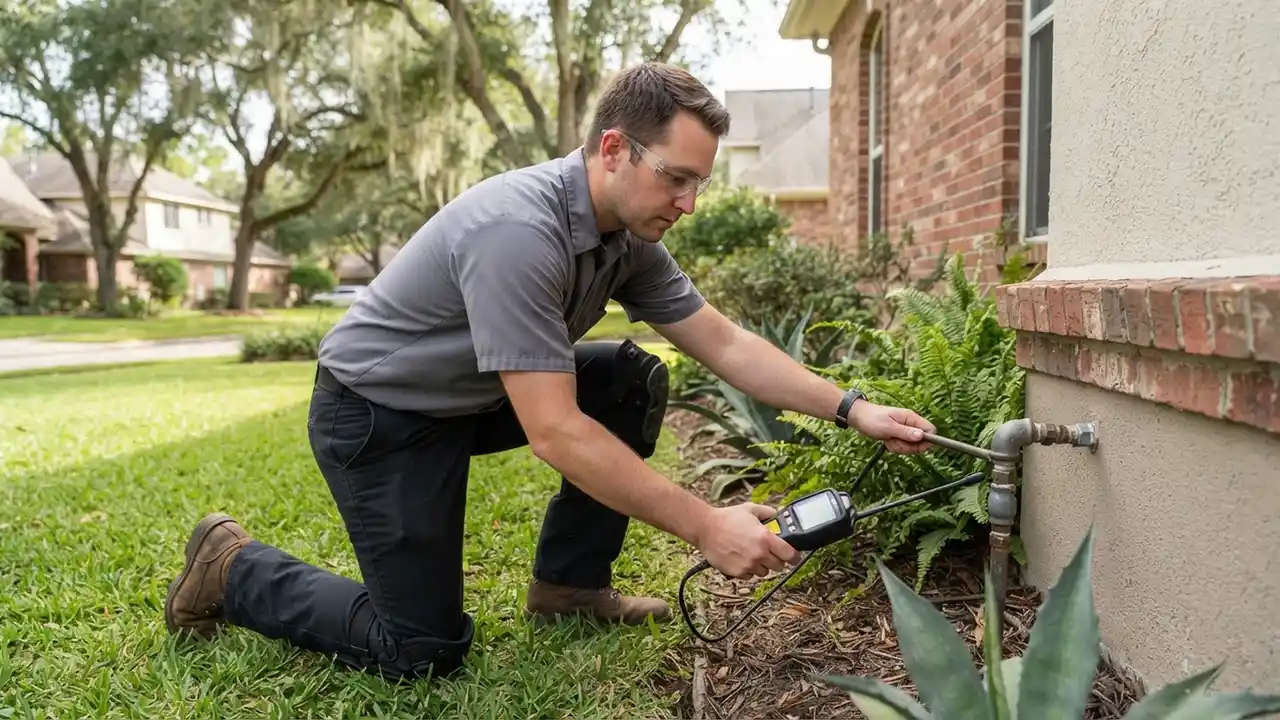
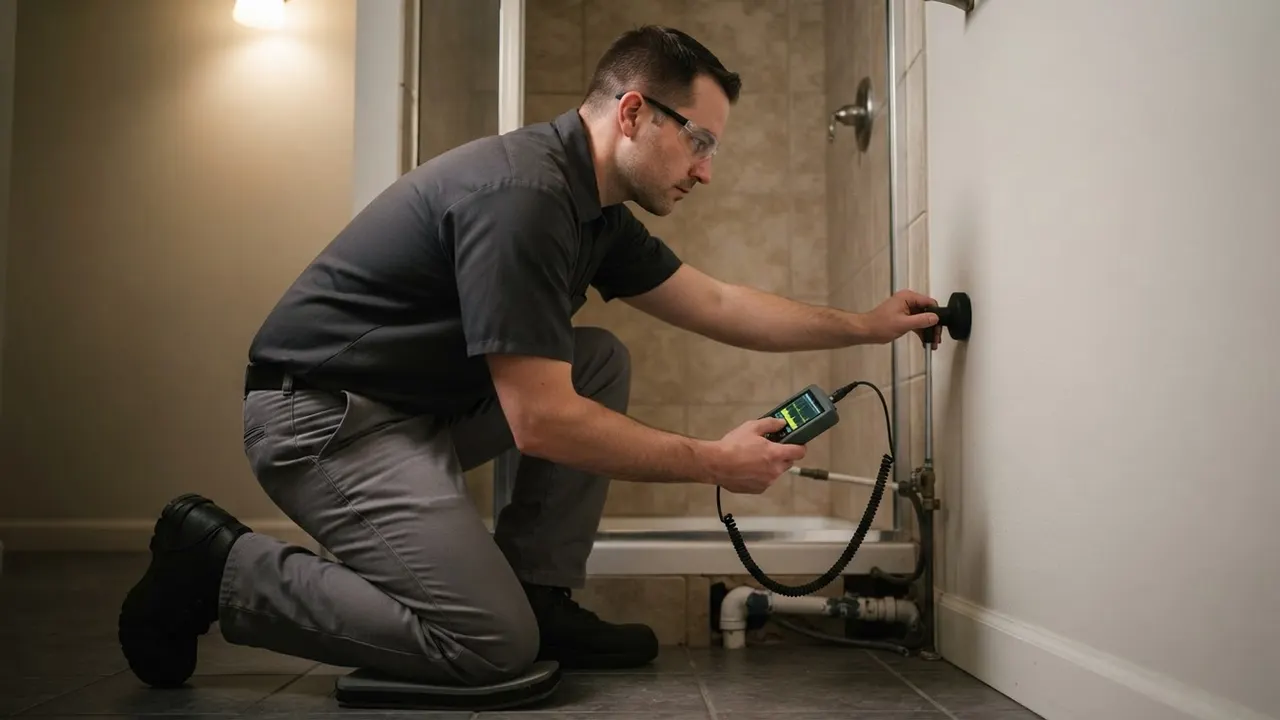
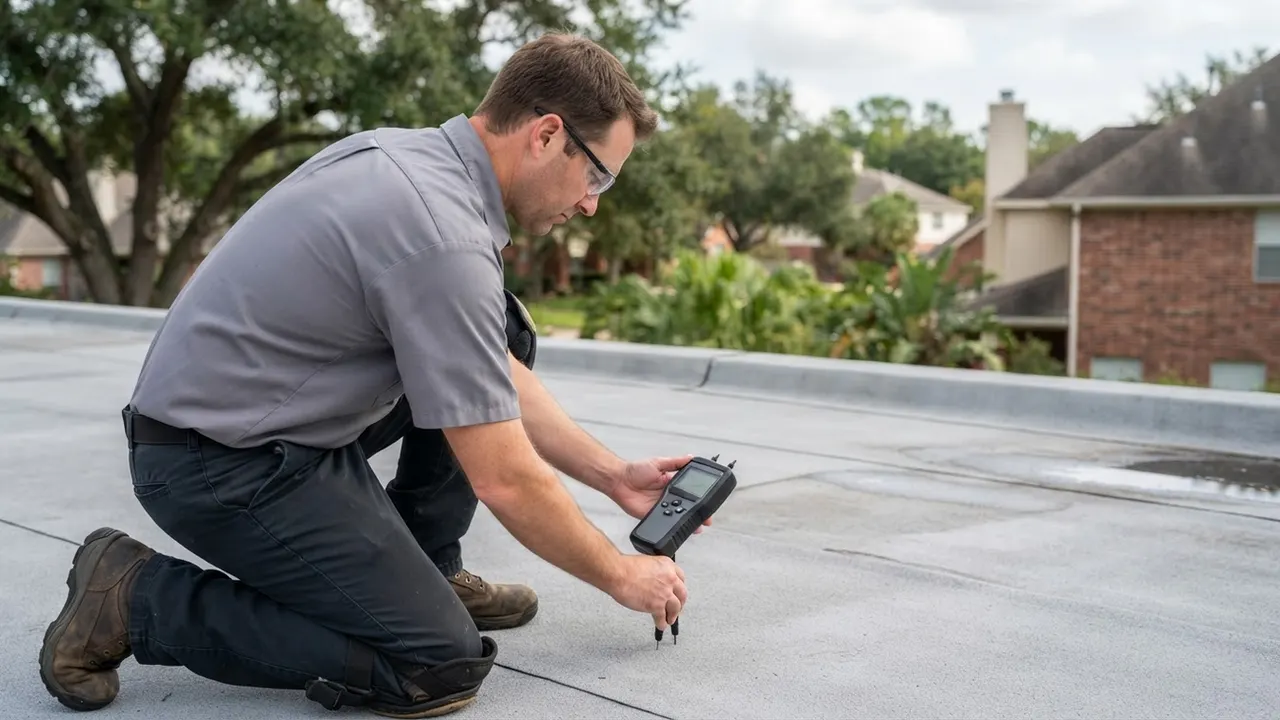
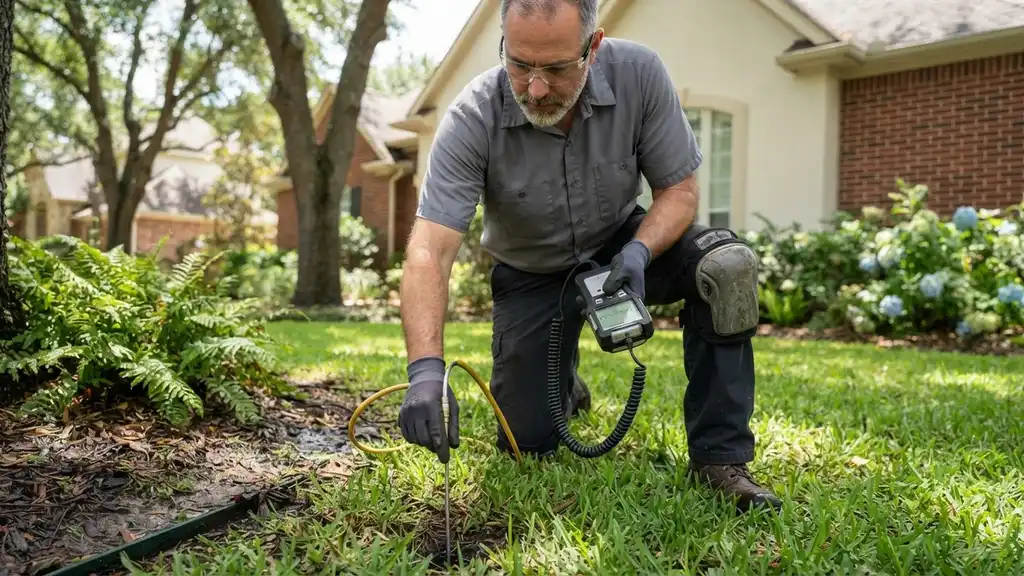
Electronic, thermal, and tracer gas testing for Houston AC systems

Refrigerant Leak Detection in Houston That Finds the Real Leak

Refrigerant Leak Detection in Houston starts with finding the exact spot your AC is losing charge, not just topping it off. We test coils, line sets, and fittings with electronic detectors and thermal imaging, then repair the leak and verify the system holds pressure. If your system ices up, blows warm air, or needs Freon every season, our Houston refrigerant Leak Detection team can pinpoint the problem and get your cooling back before the next heat wave.

↗
Fast online booking

Request service today

Tell us what is happening. Our local team will confirm your visit shortly.

Call Now 8328394984 → No spam. No obligation. Just practical help.
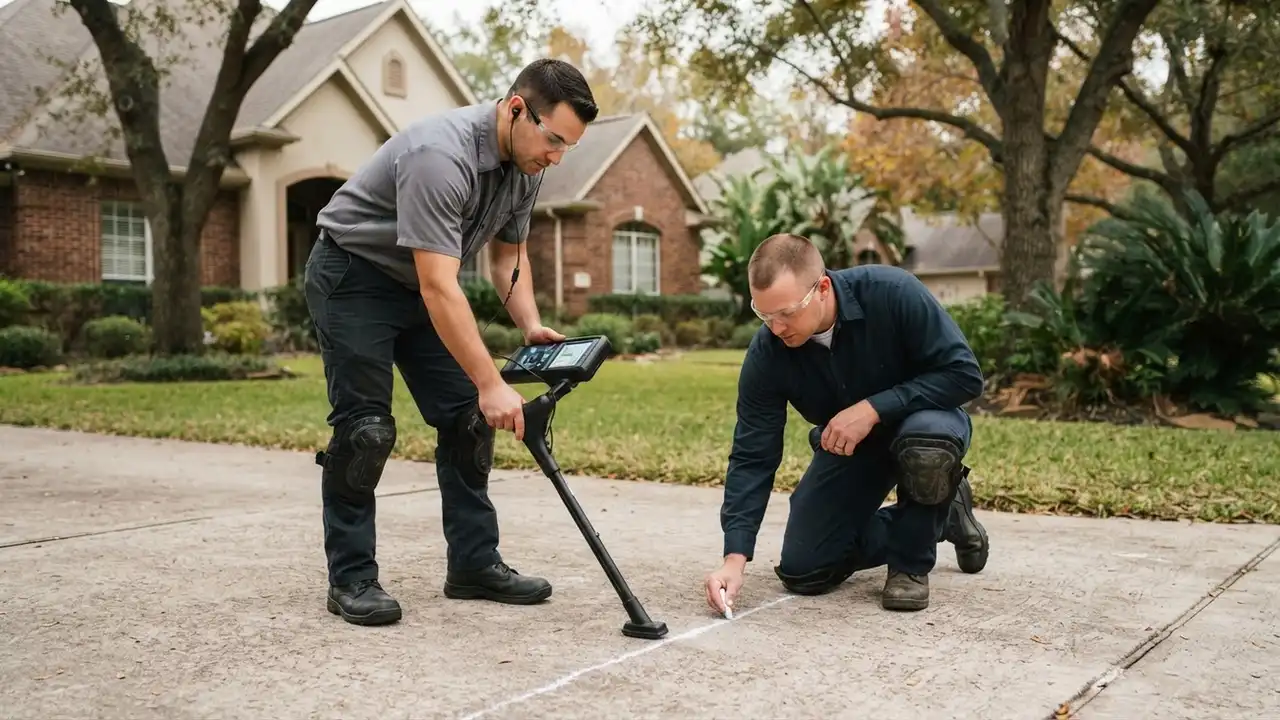
Leak Detection in Houston: Two leak detection specialists collaborate, one holding a pipe locator to the ground, while the
Careful work. Honest options.
About this service

What Refrigerant Leak Detection in Houston Really Involves

Refrigerant Leak Detection in Houston is a diagnostic service that locates where an air conditioning system is losing refrigerant, using electronic sniffers, thermal imaging, pressure testing, and tracer gas to isolate the leak before any recharge. A sealed system should never lose charge. When it does, the refrigerant escapes through a pinhole in the evaporator coil, a rubbed line set, a loose Schrader valve, or a brazed joint that cracked. We test the whole circuit, not just the easy-to-reach parts.

Houston summers push AC systems harder than almost anywhere in Texas. A system that runs 10 to 12 hours a day at 95°F ambient will show a small leak fast, and a unit that is 2 pounds low on R-410A can lose 20 to 30 percent of its cooling capacity. Homeowners in Memorial and the Energy Corridor often call us after a tech has added refrigerant twice in two seasons. That pattern is the tell. If you are searching for refrigerant leak Detection near me Houston, we test the system and tell you exactly where it is leaking.

  • ✓ Stop Paying for Recharge
  • ✓ Restore Full Cooling Capacity
  • ✓ Protect the Compressor
  • ✓ Lower Electric Bills
What's included

What Our Refrigerant Leak Detection Service Includes

Every refrigerant diagnostic includes the full test and a written finding. If you approve the repair, we handle the fix and the recharge in the same visit when parts are on the truck. Here is what is covered.

✓

Full System Pressure Test

We connect pressure testing gauges and record suction and liquid line pressures against the manufacturer's saturation chart. This tells us whether the system is low on charge and how low.

✓

Electronic Leak Sweep

We sweep the evaporator coil, condenser coil, line set, and all accessible joints with an electronic leak detector. The detector picks up refrigerant at parts-per-million levels, so even small leaks show up.

✓

Thermal Imaging Confirmation

A thermal imaging camera shows temperature differences where refrigerant is escaping. We use it to confirm the electronic reading and to show you the leak on screen.

✓

Tracer Gas Test When Needed

If the leak is stubborn or the electronic detector gives an ambiguous reading, we add a small amount of tracer gas and use a tracer gas detector to pinpoint the exact spot. This is the most reliable confirmation method.

✓

Repair and Recharge

We repair the leak, evacuate the system, and recharge to factory specification. Then we run the system under load for 20 to 30 minutes to confirm the repair holds and the cooling is restored.

✓

Written Findings

You get a written report with the leak location, the test results, and the repair performed. That documentation is useful for warranty claims and for your own records.

How it works

How Our Refrigerant Leak Detection Process Works

01

System Interview

We start by asking how the system has been behaving: warm air, icing, short cycling, or repeated recharges. That history tells us where to look first. This takes 10 to 15 minutes and saves time on the diagnosis.

02

Pressure and Charge Check

We connect pressure testing gauges to the service ports and compare readings against the manufacturer's saturation chart for the outdoor temperature. Low suction pressure with high superheat points to a charge loss. We record the numbers before touching anything.

03

Electronic and Thermal Sweep

Using an electronic leak detector and a thermal imaging camera, we sweep the evaporator coil, condenser coil, line set, and all brazed joints. The electronic detector picks up refrigerant at parts-per-million levels, and the thermal camera shows temperature anomalies where refrigerant is escaping.

04

Isolate and Confirm

Once we have a suspect area, we isolate the circuit and pressure test with dry nitrogen. If the leak is stubborn, we add a small amount of tracer gas and use a tracer gas detector to confirm the exact spot. This step is what separates a guess from a diagnosis.

05

Repair and Verify

We repair the leak, whether that means brazing a joint, replacing a Schrader core, or replacing a coil section. Then we evacuate the system, recharge to factory spec, and run it under load for 20 to 30 minutes to confirm the repair holds and the system cools properly.

Tools & methods

Tools and Methods We Use for Refrigerant Leak Detection

Purpose-built equipment, used by trained technicians — so the job is done accurately the first time.

Electronic Leak Detector

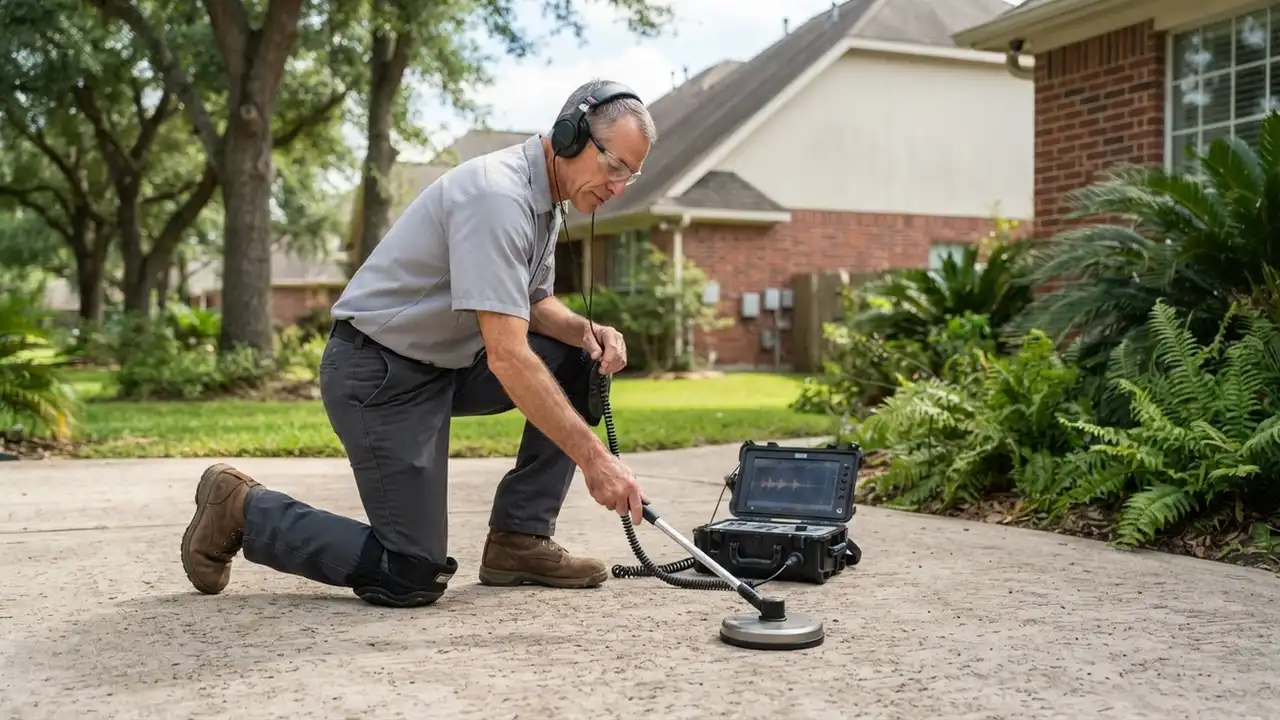
Picks up refrigerant at parts-per-million levels on coils, line sets, and valves. It is the first pass on every diagnostic and finds small leaks that pressure testing alone can miss.

Thermal Imaging Camera (FLIR)

Shows temperature differences where refrigerant is escaping. We use it to confirm the electronic reading and to show you the leak on screen.

Pressure Testing Gauges

Measure suction and liquid line pressures against the manufacturer's saturation chart. The readings tell us whether the system is low on charge and how low.

Tracer Gas Detector

Confirms stubborn leaks after we add a small amount of tracer gas to the circuit. It is the most reliable way to pinpoint a leak in a concealed area.

Acoustic Listening Device

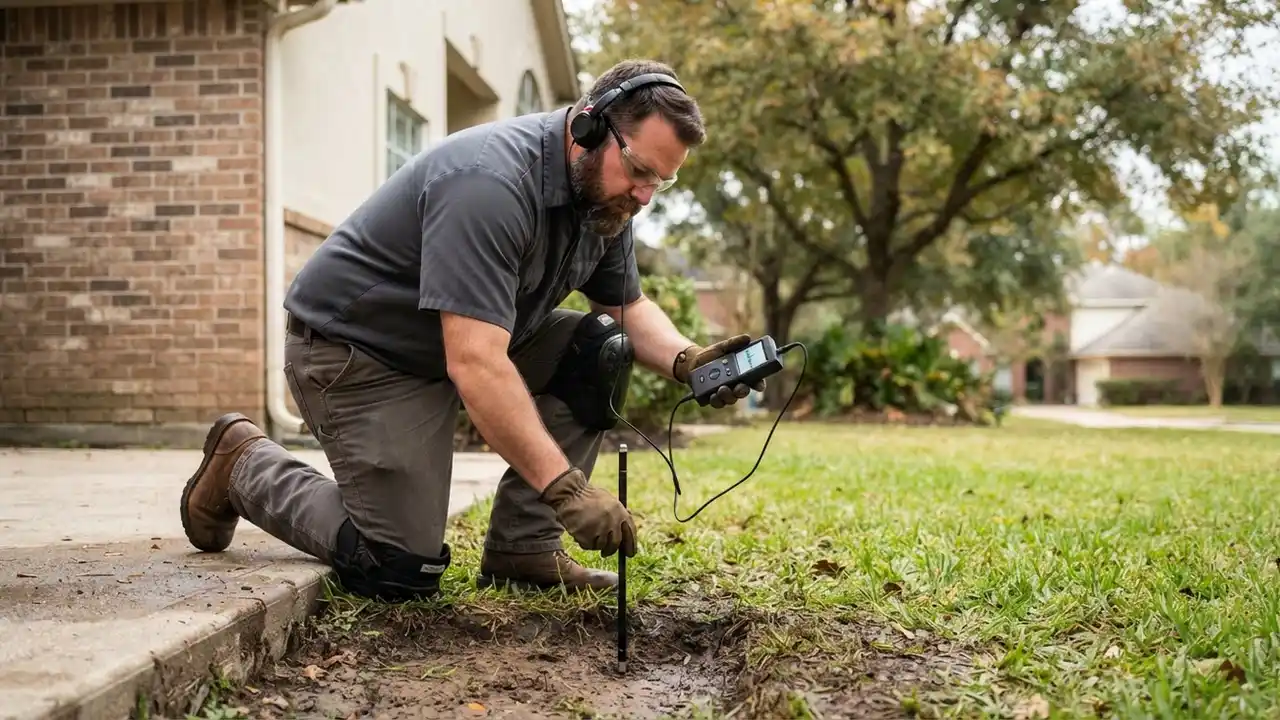
Picks up the sound of escaping refrigerant at joints and valves. We use it on line sets and chases where access is limited.

Moisture Meter

Checks for moisture in insulation and attic spaces where AC condensate or refrigerant oil may be present. It helps separate a refrigerant problem from a water problem.

Pipe Inspection Camera

Lets us look inside chases and wall cavities without opening the wall. We use it when the leak is concealed and we need to see the line set.

Real results

Before and after.

Icing Coil in a Memorial Home

Before

A 4-ton system in Memorial was icing the indoor coil every two weeks. The homeowner had paid for three recharges in two years, and the system still blew warm air by mid-July.

After

We found a pinhole leak in the evaporator coil with a thermal camera, repaired the coil section, and recharged the system to factory spec. The system held pressure and cooled the house to 72°F on a 98°F day.

Schrader Valve Leak in the Heights

Before

A homeowner in the Heights had a system that needed refrigerant every season. The previous company kept adding Freon without testing for a leak.

After

We pressure tested the system and found a leaking Schrader valve. We replaced the valve, evacuated the system, and recharged it. The system held pressure and the cooling returned to normal.

Rooftop Unit Leak in the Energy Corridor

Before

A property manager had a rooftop unit losing charge and shutting down on high pressure. The building had 12 units, and this one was the oldest.

After

We traced the leak to a brazed joint, repaired it, and verified the repair with a standing pressure test. The unit held pressure and returned to full capacity. We provided a written report for the maintenance file.

Problems we solve

Refrigerant Leak Problems We Solve in Houston

These are the calls we get most often from Houston homeowners and property managers. Each one has a specific cause and a specific fix.

Ask a pro →
01

AC blows warm air and never reaches setpoint

We pressure test the system, sweep the coils and line set with an electronic detector, and find the leak. Once repaired and recharged, the system reaches its setpoint again and the compressor cycles normally.

↗
02

Ice forms on the indoor coil or outdoor line

We check the charge and airflow first. If the charge is low, we test for a leak. We repair the leak, verify the repair with a pressure test, and recharge the system to spec.

↗
03

System needs refrigerant every season

We find the leak instead of recharging again. Our affordable refrigerant Leak Detection Houston TX service locates the source, and we repair it so you stop paying for refrigerant that leaks out.

↗
04

Hissing or bubbling sound at the line set

We use an acoustic listening device and an electronic detector to locate the sound source. Then we isolate the circuit, pressure test, and repair the leaking joint or valve.

↗
Transparent pricing

Refrigerant Leak Detection Pricing in Houston

$150 - $1,250 depending on leak location and repair scope

Typical 2026 pricing for refrigerant leak detection in Houston runs $150 to $350 for the diagnostic, and the repair adds $200 to $900 depending on the leak location and parts. Evaporator coil leaks cost more because the coil has to be accessed or replaced. We quote the diagnostic upfront and credit it toward the repair if you proceed the same visit. If you are looking for affordable refrigerant Leak Detection Houston TX, call us and we can give you a range before we arrive.

Finding and repairing the leak costs less than repeated recharges and protects the compressor. A $300 repair now can prevent a $2,000 compressor replacement later.

01Leak Location

An accessible line set leak is faster to repair than a leak in a concealed chase or an evaporator coil. Access drives labor time and cost.

03System Size and Type

A 2-ton residential split system takes less time to test than a 20-ton commercial rooftop package. Larger systems have more joints and more area to sweep.

04Refrigerant Type

R-410A is common and readily available. R-22 is phased out and costs more per pound. If your system uses R-22, the recharge cost is higher.

Proof you can check

Licensed, Insured, and Accountable

✓
EPA Section 608 Refrigerant Handling CertificationU.S. Environmental Protection Agency
✓
State-Licensed Plumbing ContractorTexas State Board of Plumbing Examiners
✓
Backflow Prevention Assembly Tester CertificationTexas Commission on Environmental Quality
✓
OSHA Safety ComplianceOccupational Safety and Health Administration
Customer reviews

What Houston Customers Say About Our Refrigerant Leak Detection

★★★★★
“Our AC was icing up every two weeks and another company kept adding Freon. Leak Detection The Heights found a pinhole in the evaporator coil in about an hour with a thermal camera. They showed me the leak on the screen. Repaired it, recharged the system, and we have not had a problem since. That was last summer.”
MT

Marcus T.Homeowner, Memorial

✓ Verified
★★★★★
“We manage 12 rental units and had a refrigerant leak in one of the rooftop units. They traced it to a brazed joint, repaired it, and gave us a written report with the pressure test results. That documentation is exactly what we need for our maintenance records. We use them for all our leak detection now.”
DR

Danny R.Property Manager, Energy Corridor

✓ Verified
Good questions

Frequently Asked Questions About Refrigerant Leak Detection

8328394984 →

Most refrigerant leak diagnostics in Houston run $150 to $350, and the repair adds $200 to $900 depending on the leak location. Evaporator coil leaks cost more because the coil has to be accessed or replaced. We quote the diagnostic upfront and credit it toward the repair if you proceed the same visit. Call us and we can give you a range before we arrive.

The three most common signs are warm air from the vents, ice on the indoor coil or outdoor line, and a system that needs refrigerant every season. A hissing or bubbling sound at the line set is another clue. If your AC runs constantly and never reaches the thermostat setpoint, that is a reason to test. We can check the charge and confirm a leak the same day.

Licensed HVAC and leak detection technicians fix refrigerant leaks, and the work falls under EPA Section 608 rules for refrigerant handling. We are a Houston-based leak detection company that handles the diagnosis and the repair, including brazing, valve replacement, and recharge. You do not need to call a separate AC company after the leak is found.

It depends on the system age and the manufacturer warranty. Most equipment warranties cover parts like coils for 5 to 10 years, and some cover labor for the first year. The diagnostic fee is usually not covered. We can review your warranty paperwork with you and tell you what is likely covered before any repair begins.

Ready when you are

Schedule Refrigerant Leak Detection in Houston Today

If your AC is blowing warm air or you have been told it needs another recharge, call us. We find the leak, repair it, and verify the repair before we leave. Same-day appointments and 24/7 emergency response for Houston and Harris County.

Book a Diagnostic 8328394984 →
Request an appointment

Get a Houston Leak Detection Quote

Call us at 832-839-4984 or send an email and we will get back to you fast. We answer the phone 24/7 for emergencies and schedule standard detections same day or next day across Houston and Harris County. Tell us what you are seeing and we will give you a flat detection price over the phone.

Call anytime8328394984Email the office[email protected]
Office hoursOpen 24 hours · 7 days a week
Tap to call8328394984