Water bill jumped $100 or more with no explanation
We pressure test the supply lines to confirm the leak, then locate it with acoustic and thermal tools. Most leaks are found in under two hours. We repair the line and re-test before we leave.
Pressure Testing for Leaks Houston TX is the fastest way to confirm whether water is escaping from your plumbing system before it damages your foundation. We pressurize your lines, watch the gauge, and use acoustic and thermal tools to pinpoint the exact break. Whether you are in Bellaire, The Heights, or Katy, our licensed technicians find the leak and give you a clear repair plan the same day.
Tell us what is happening. Our local team will confirm your visit shortly.
Call Now 8328394984 → No spam. No obligation. Just practical help.
Pressure Testing for Leaks Houston TX is a diagnostic procedure that isolates a section of plumbing, fills it with water or air to a set pressure, and monitors the gauge for drops that prove a leak exists. We use a hydrostatic test pump to pressurize copper pipe, PEX tubing, or PVC pipe runs, then watch the pressure testing gauge for 15 to 60 minutes. If the needle falls, we know the line is losing water. From there, an acoustic listening device or thermal imaging camera narrows down the exact location.
Houston homeowners call us when the water bill jumps $80 to $200 in a single month, when a warm spot appears on the floor, or when the foundation starts shifting. Slab leaks are common in Harris County because our clay soil expands and contracts with every wet and dry cycle, stressing pipes buried underneath. If you search for pressure testing for leaks Houston TX near me, you want a crew that can test, locate, and repair without tearing up half your house.
Every pressure testing job includes the diagnostic test, leak location, and a written summary. If we find a leak, we quote the repair before we start. We do not charge extra for the re-test after repair. Here is what you get when you book us.
We isolate the suspect line and pressurize it to 40 to 80 PSI. The test runs 15 to 60 minutes. You see the gauge readings and get a copy in your report.
If the test confirms a leak, we use an acoustic listening device to pinpoint the location. This narrows the leak to within 12 to 18 inches, so we cut one small hole instead of guessing.
A FLIR thermal imaging camera shows temperature differences on the slab or wall surface. We use it to confirm the leak location, especially on hot water lines.
You get a summary of the test, the pressure readings, the leak location, and the repair recommendation. This documentation supports insurance claims if needed.
If we find a leak, we quote the repair before we start. The price is firm. No hourly billing. You decide whether to proceed.
After the repair, we re-pressurize the line and hold it for 30 minutes. You see the gauge hold steady before we close up the access hole.
We shut off the main water supply and isolate the section of plumbing under suspicion. For a slab leak, that means capping off fixtures and pressurizing only the underground lines. This step takes 20 to 30 minutes and keeps the test accurate by removing interference from toilets, water heaters, and irrigation.
We connect a hydrostatic test pump to the isolated line and bring it up to 40 to 80 PSI, depending on pipe material and code requirements. A pressure testing gauge records the reading. We watch it for 15 to 60 minutes. Any drop beyond normal temperature fluctuation means there is a leak.
Once we confirm a leak, we switch to location tools. An acoustic listening device picks up the hiss of escaping water. A thermal imaging camera from FLIR shows temperature differences on the slab surface. If those are inconclusive, we introduce a tracer gas detector to trace the leak path through the soil.
We expose the pipe, cut out the damaged section, and replace it with new copper or PEX. Fittings get Teflon tape and pipe sealant where threaded. After the repair, we re-pressurize the line and hold it for another 30 minutes to confirm the fix. You see the gauge hold steady before we close anything up.
We photograph the test readings, the leak location, and the completed repair. You get a summary showing before-and-after pressure readings and the materials used. If you ever need to file an insurance claim, that documentation supports it. The whole process usually runs two to four hours.
Purpose-built equipment, used by trained technicians — so the job is done accurately the first time.
Pressurizes water lines to 40-80 PSI for leak detection. We use it on copper, PEX, and PVC pipe.
Monitors pressure drop over 15-60 minutes. A drop confirms a leak.
Amplifies the sound of escaping water to pinpoint the leak location within 12-18 inches.
Shows temperature differences on slab or wall surfaces caused by hot water leaks.
Traces gas introduced into the line when acoustic and thermal tools cannot locate the leak.
Visual inspection of sewer and drain lines to find breaks, root intrusion, and blockages.
Checks for hidden water in walls, floors, and ceilings after pressure testing confirms a leak.
A homeowner in Bellaire noticed a $180 increase in their water bill and a warm spot on the kitchen floor. They called us after another plumber could not find the leak. We pressure tested the hot water line and confirmed a slab leak under the kitchen.
We located the leak with thermal imaging, cut a 2-foot section of concrete, and replaced the damaged copper pipe. The re-test held at 60 PSI for 30 minutes. The water bill returned to normal the next month.
A 1940s home in The Heights had original copper pipe. The owner heard water running at night but could not find it. We pressure tested the supply lines and found a pinhole leak in the wall behind the bathroom.
We cut a small access hole, repaired the pipe with a new copper section, and re-tested. The pressure held. The repair cost $450, far less than the $3,000 the owner feared.
A property manager in Greenway Plaza needed annual fire sprinkler pressure testing. The system had not been tested in two years. We isolated the zones and pressurized each one.
One zone lost pressure, indicating a leak. We located it with acoustic equipment and repaired a broken fitting. The re-test passed. The building stayed compliant and avoided fines.
Pressure testing answers the question every homeowner asks: is my plumbing leaking, and if so, where? Here are the most common problems we solve for customers across Houston.
Ask a pro →We pressure test the supply lines to confirm the leak, then locate it with acoustic and thermal tools. Most leaks are found in under two hours. We repair the line and re-test before we leave.
We isolate the hot water line and pressure test it. If it loses pressure, we locate the leak with a thermal imaging camera. We repair the pipe and restore the slab.
Pressure testing confirms whether a plumbing leak is causing the movement. If we find one, we repair it and re-test. If not, we tell you and recommend a foundation specialist.
We pressure test the lines in that area and use a moisture meter to check for hidden water. If we find a leak, we repair it and dry the area.
$180 - $850 depending on scope
Most residential pressure tests cost $180 to $450 in 2026, depending on how many lines we isolate and how long the test takes. Slab leak testing with acoustic and thermal location adds $100 to $200. If we find a leak and you approve the repair, we often credit part of the diagnostic fee toward the fix. We quote the price before we start. No hidden fees. Affordable pressure testing for leaks Houston TX means you know the number upfront.
Pressure testing saves you money by preventing unnecessary demolition and finding the leak fast. A $300 test can save you $5,000 in foundation repair or water damage. We credit part of the diagnostic fee toward the repair when you hire us to fix the leak.
Testing one supply line is faster than testing the whole house. We isolate zones to narrow down the leak, which adds time but saves you money on unnecessary repairs.
If the leak is under a slab or behind a wall, we need more time to access it. Crawl spaces and attics add labor. We quote based on the specific situation.
Some leaks show up in 15 minutes. Others take an hour. We bill for the time required to get a definitive answer.
Acoustic and thermal tools add $100-$200. Tracer gas adds more. We use the least invasive method first and escalate only if needed.
“Our water bill doubled and we could not find the leak. Leak Detection The Heights came out and pressure tested the whole house. They found a slab leak under the kitchen in about an hour. Fixed it the same day. The bill went back to normal the next month. Worth every penny.”
Maria G.Homeowner, Bellaire
✓ Verified“We manage a commercial building and had a mystery leak in the basement. Their techs used hydrostatic testing and a thermal camera to find a broken pipe in the wall. They repaired it without shutting down the building. Professional and fast. We use them for all our properties now.”
James R.Property Manager, Downtown Houston
✓ Verified“I heard water running at 2 a.m. and called the emergency line. They answered and had a tech at my house by 3:30. He pressure tested the lines and found a pinhole leak in the copper pipe. Fixed it before sunrise. I cannot say enough good things about this company.”
Linda T.Homeowner, The Heights
✓ VerifiedMost residential pressure tests run $180 to $450 in 2026, depending on how many lines we isolate and how long the test takes. Slab leak testing with acoustic and thermal location adds $100 to $200. If we find a leak and you approve the repair, we often credit part of the diagnostic fee toward the fix. Call us at 832-839-4984 for a quote based on your address.
We isolate a section of pipe, fill it with water or air to a set pressure, and watch a gauge for 15 to 60 minutes. If the pressure drops, there is a leak. Then we use an acoustic listening device or thermal imaging camera to pinpoint the location. The whole process takes two to four hours and gives you a confirmed diagnosis, not a guess.
Leak Detection The Heights offers pressure testing for leaks in Houston, Texas, and across Harris County. We have been in business since 2013 and hold a Texas State Board of Plumbing Examiners license. We serve The Heights, Montrose, Bellaire, Katy, Sugar Land, and surrounding areas. Call 832-839-4984 to schedule.
Yes, when the test pressure is set correctly. We check pipe material and condition first, then pressurize to 40 to 80 PSI, which is within normal operating range. We never exceed the pipe's rated pressure. If a line is too corroded to test safely, we tell you before we start and recommend an alternative like tracer gas detection.
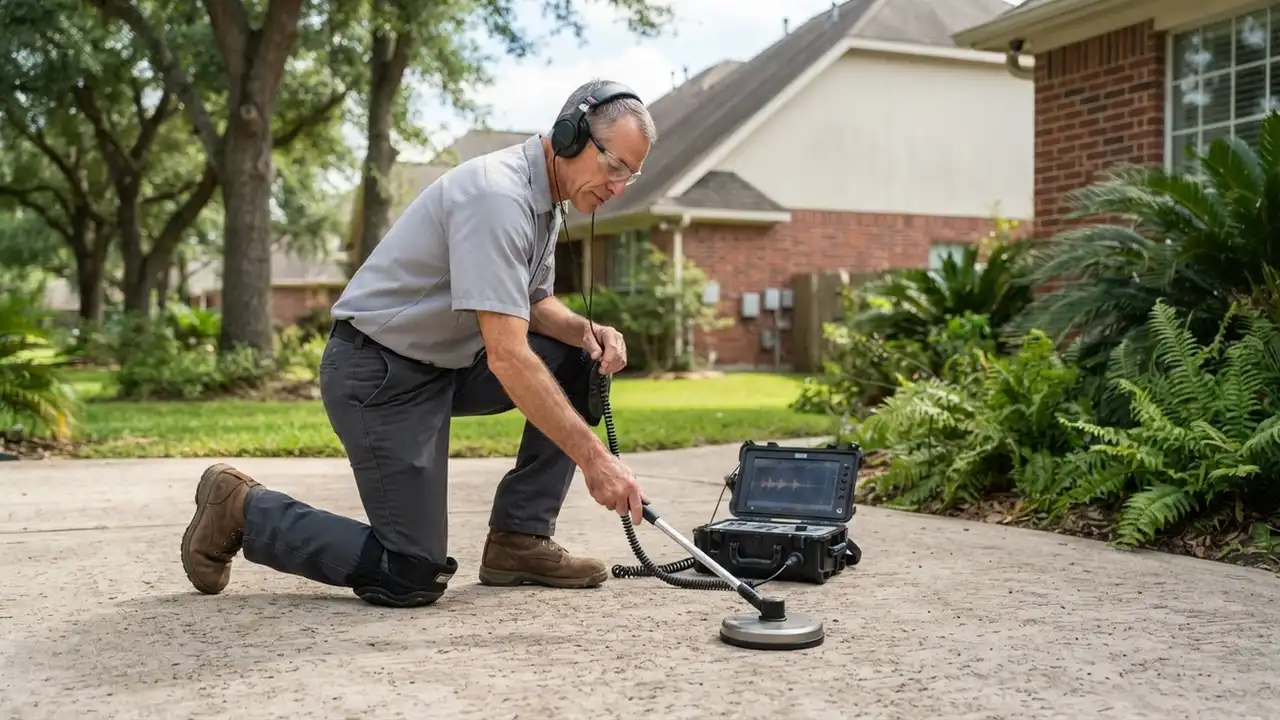 Slab Leak DetectionPressure testing confirms whether the leak is under your slab. We then use acoustic and thermal tools to pinpoint the exact spot before cutting concrete. Most slab leaks in Houston start as pinhole leaks in copper pipe.Explore →
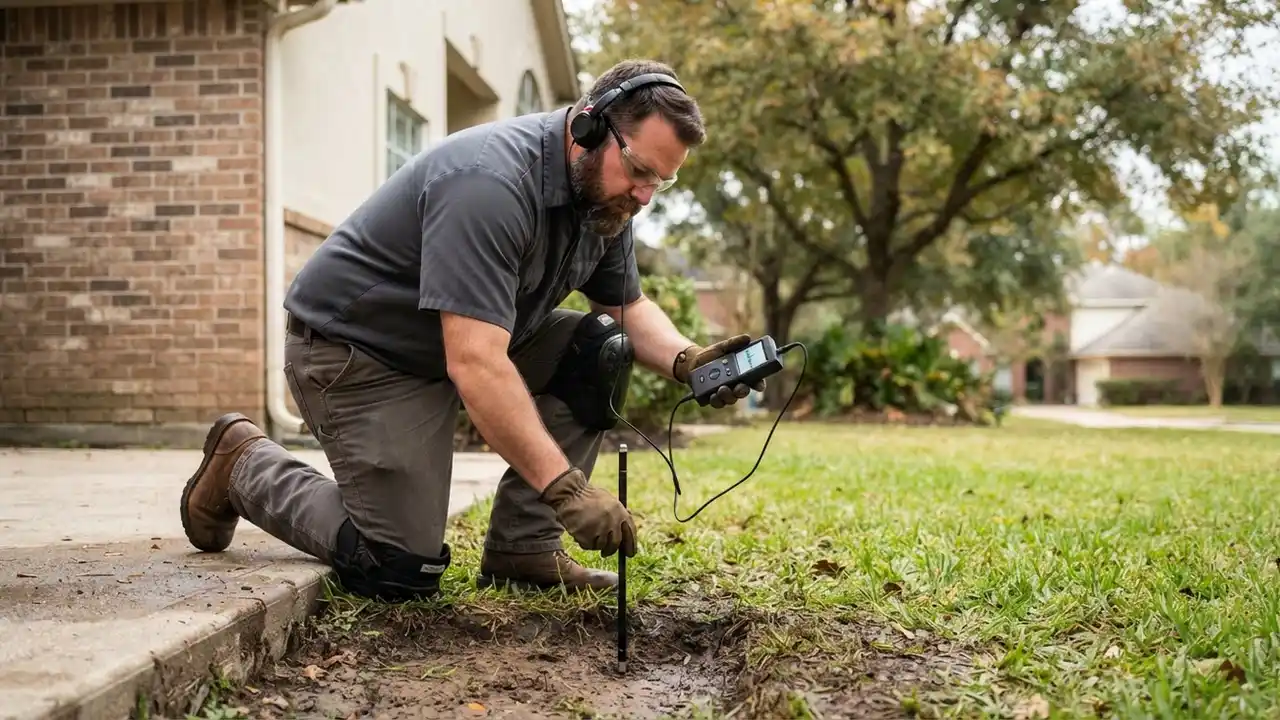 Foundation Leak DetectionA leaking supply line under your foundation causes soil movement and cracks. Pressure testing isolates the line so we can confirm the leak and stop the damage before it costs you thousands in foundation repair.Explore →
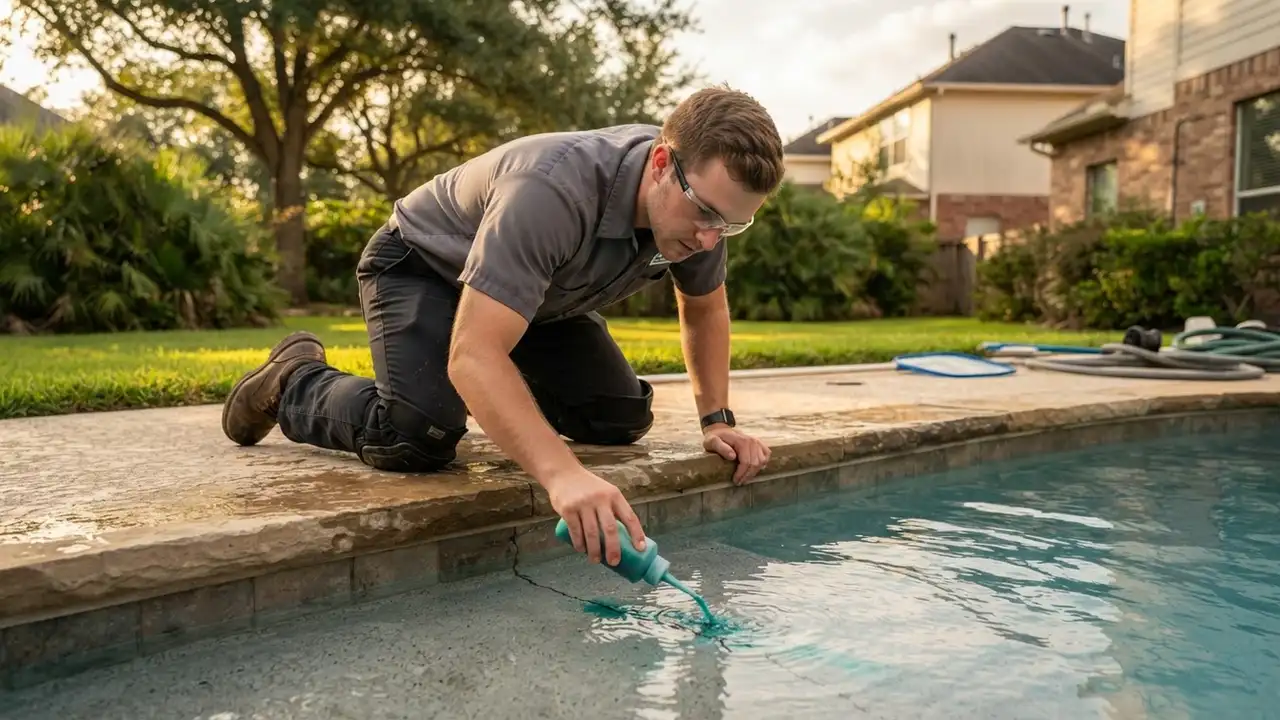 Pool Leak DetectionPool plumbing loses water through underground lines. We pressure test the return and suction lines to find breaks that dye testing misses. Houston pools settle with our clay soil, which stresses PVC pipe.Explore →
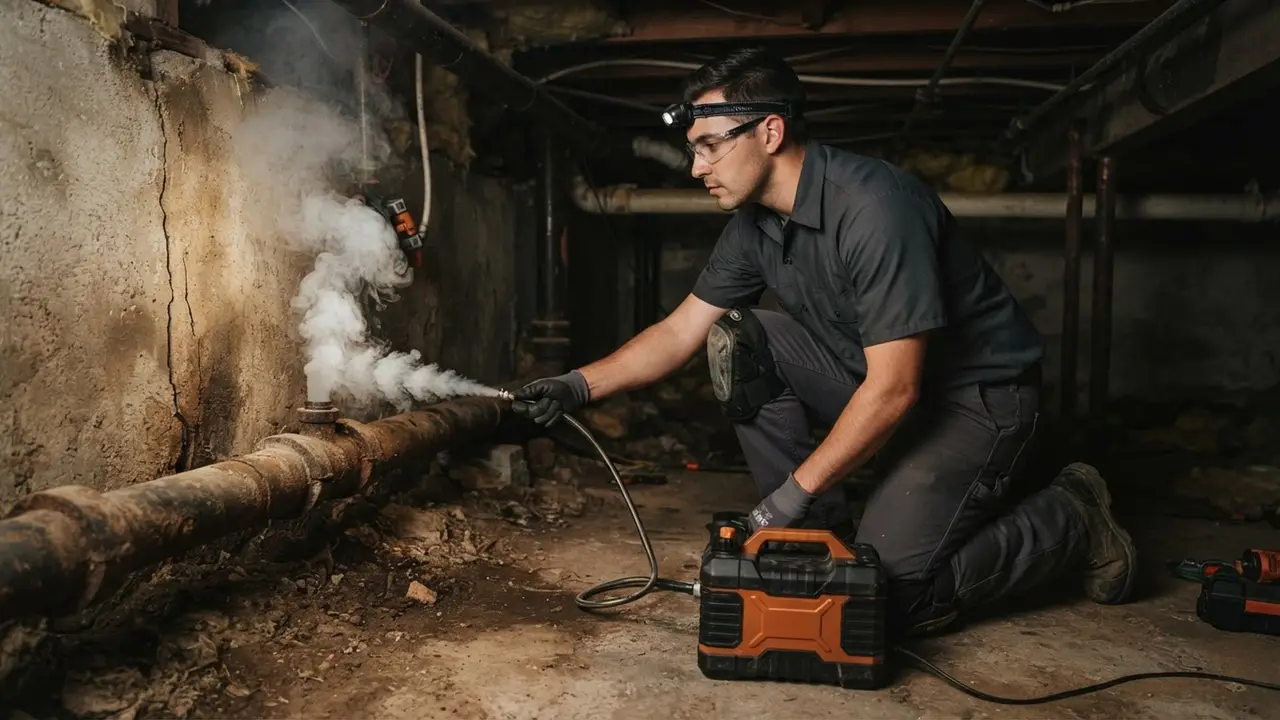 Sewer Line Leak DetectionSewer lines do not hold pressure the same way supply lines do, but we use air pressure testing and pipe inspection cameras to find breaks, root intrusion, and offset joints. Common in older Houston neighborhoods with clay tile pipe.Explore →
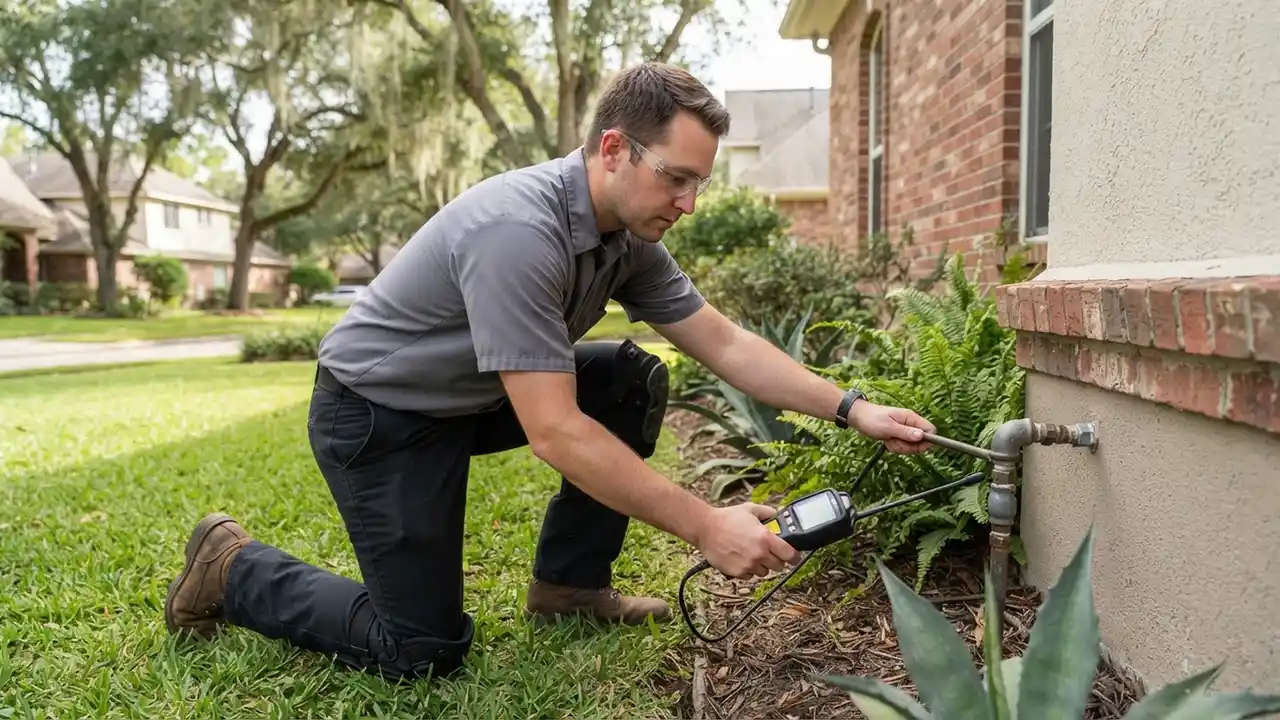 Gas Leak DetectionGas lines require pressure testing after any repair or new installation. We use a pressure testing gauge and tracer gas detector to confirm the line holds. Required for code compliance and safety in Harris County.Explore →
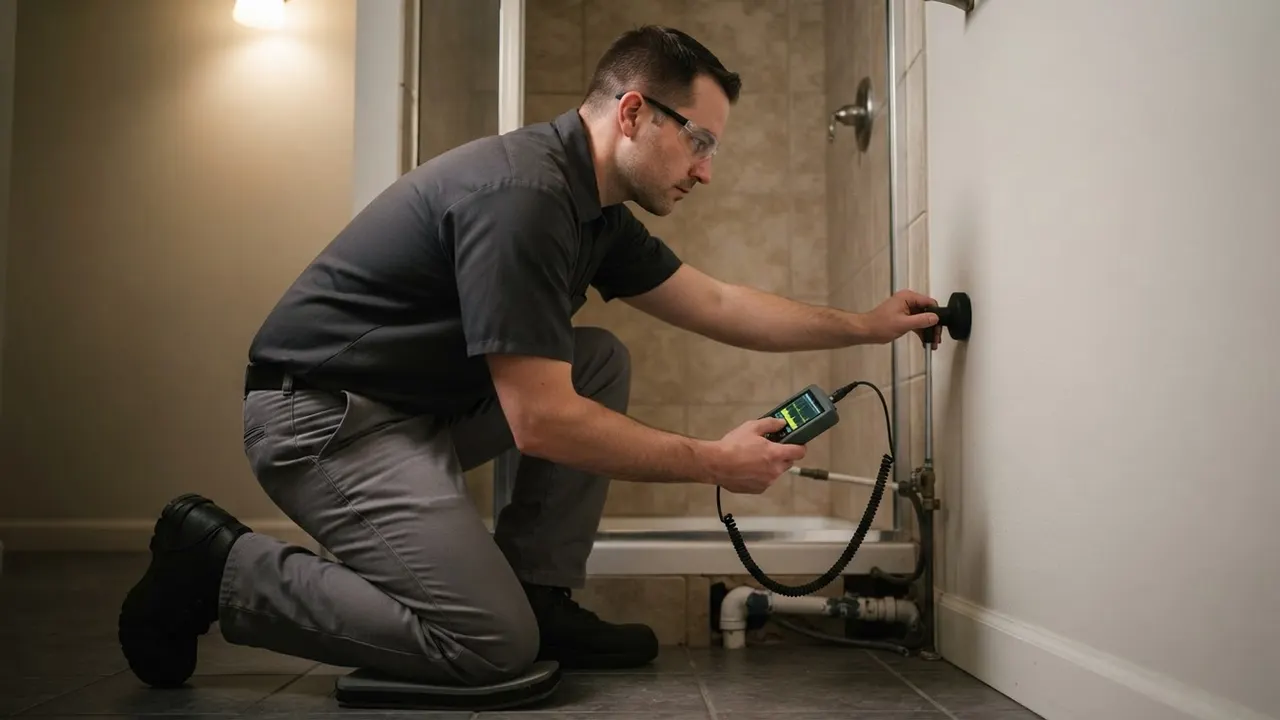 Plumbing Leak DetectionWhole-house pressure testing isolates whether the leak is in the supply system, drain system, or a fixture. We test each zone separately to narrow down the source. This is the first step in any leak investigation.Explore →
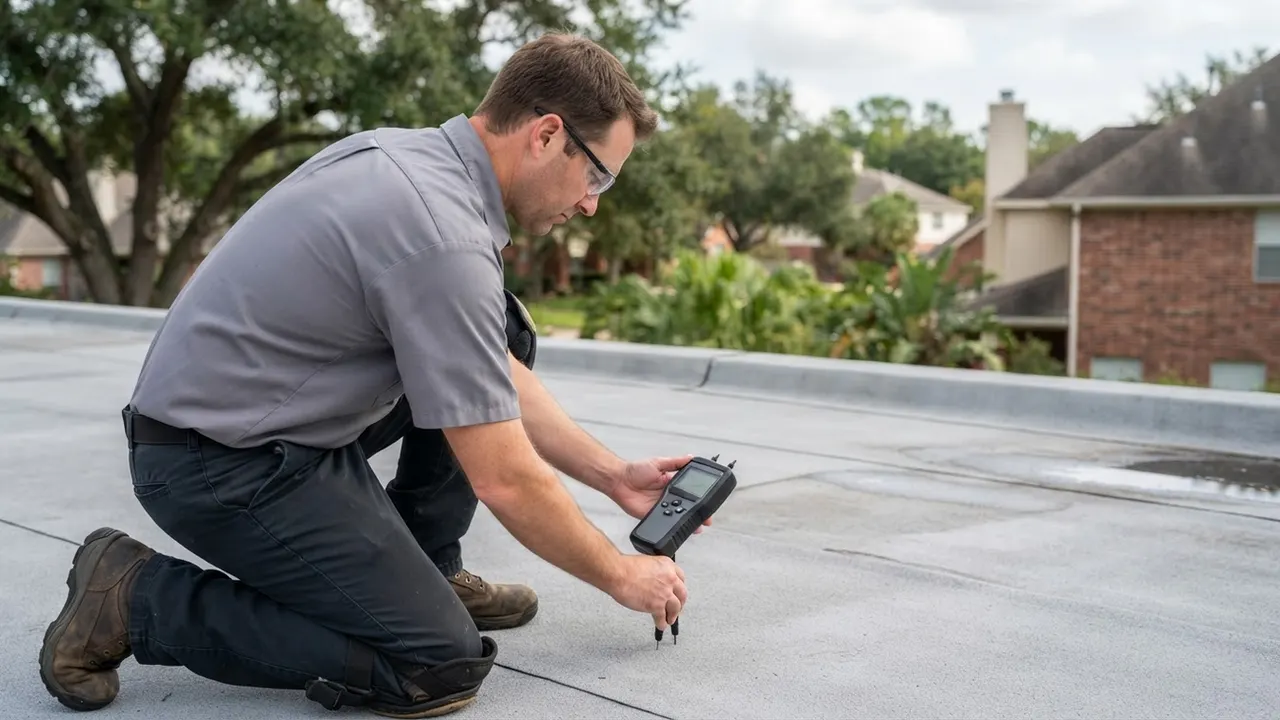 Roof Leak DetectionRoof leaks are not pressure-tested, but we use moisture meters and thermal imaging to find where water is entering. If the leak is from a plumbing vent or HVAC line on the roof, pressure testing confirms it.Explore →
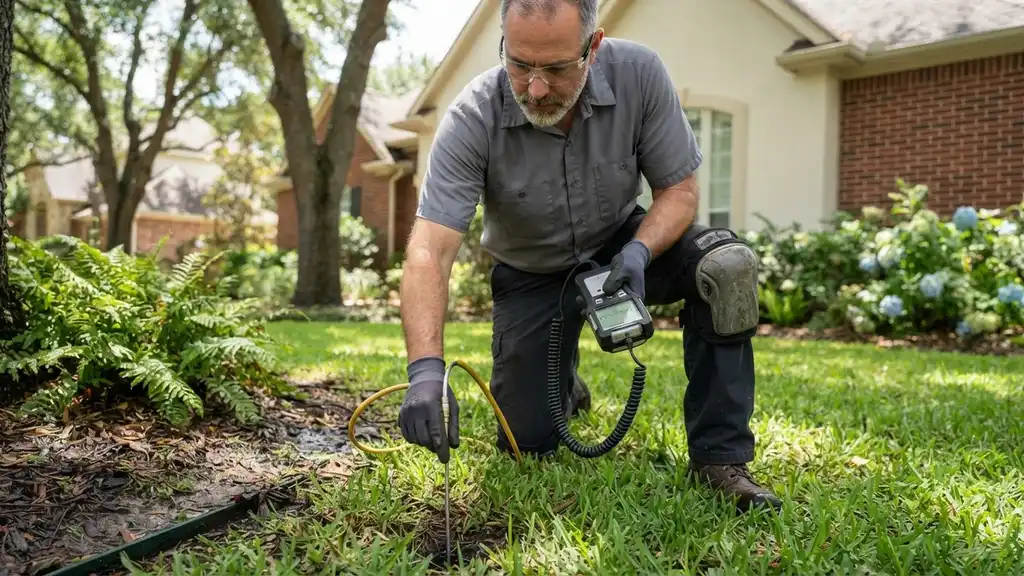 Irrigation System Leak DetectionSprinkler lines lose pressure when a head breaks or a line cracks. We isolate the irrigation zone and pressure test it separately from the house plumbing. Houston irrigation systems run year-round, so leaks are common.Explore →
If your water bill spiked or you hear water running when nothing is on, call us. We answer 24/7 and can usually test the same day. Licensed, insured, and backed by 13 years in Houston. Call 832-839-4984 now.
Call Now 8328394984 →Call us at 832-839-4984 or send an email and we will get back to you fast. We answer the phone 24/7 for emergencies and schedule standard detections same day or next day across Houston and Harris County. Tell us what you are seeing and we will give you a flat detection price over the phone.