Slow drain that plunging will not fix
We run a pipe inspection camera through the line to find the break, then repair the failed section. If the line is collapsed, we replace that segment with new PVC pipe and pressure test it before we leave.
Drain Leak Detection in Houston starts with finding the exact failure point, not guessing. We handle drain leak repair Houston TX for homeowners and businesses dealing with slow drains, damp slabs, or water bills that jumped without explanation. Our technicians use acoustic listening devices and pipe inspection cameras to locate the break, then fix it code-correct. One visit, one repair, no demolition until we know where the problem lives.
Tell us what is happening. Our local team will confirm your visit shortly.
Call Now 8328394984 → No spam. No obligation. Just practical help.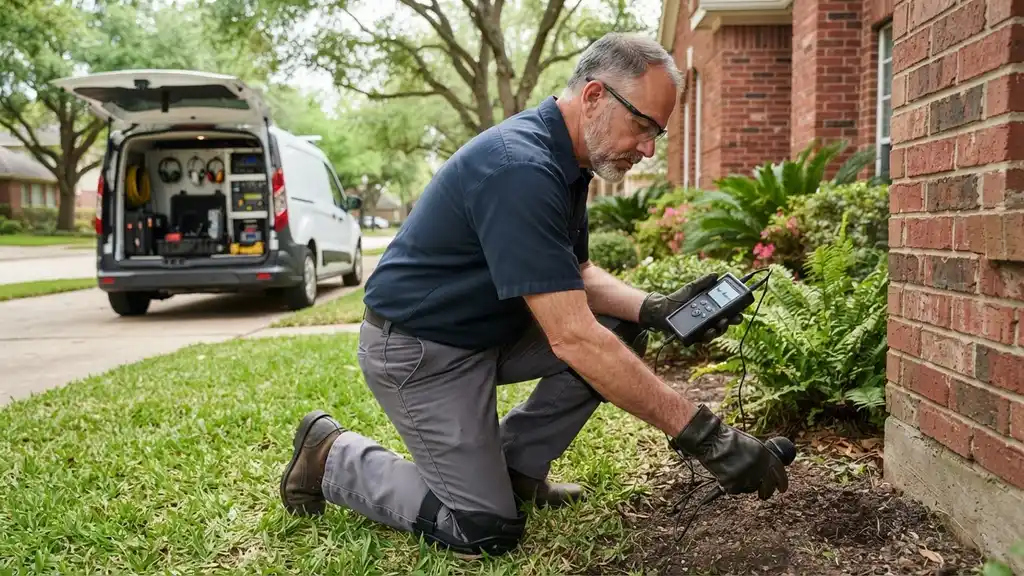
Drain Leak Detection in Houston is the process of locating a leak in the drain, waste, and vent system that runs beneath your floors, inside walls, or under the slab. A drain line carries wastewater away from sinks, tubs, toilets, and appliances. When that line cracks, separates at a fitting, or corrodes through, water escapes into the surrounding soil or building cavity. We use acoustic listening devices to hear the leak under concrete, pipe inspection cameras to see inside the line, and moisture meters to confirm saturation. The goal is a precise location before any repair begins.
Houston homes sit on expansive clay soil that shifts with every wet and dry cycle, and that movement stresses buried drain lines year after year. Older neighborhoods like the Heights and Garden Oaks still have cast iron and galvanized drain pipes that corrode from the inside out. If you have noticed a slow drain that no amount of plunging fixes, or a warm spot on the floor, you are not alone. Searching for drain Leak Detection Houston TX near me usually means the symptoms have been building for weeks. We confirm the leak and stop the damage before it spreads to the foundation.
Every drain leak detection call includes the full diagnostic work needed to find the leak and confirm the repair. We do not charge extra for the tools that make the diagnosis accurate. Here is what is covered when you book a visit.
We isolate the drain system with a hydrostatic test pump and pressurize it to confirm a leak exists. This test tells us which segment of the line failed and rules out supply-side leaks that mimic drain symptoms.
We use an acoustic listening device and a FLIR thermal imaging camera to locate the leak under floors and inside walls without opening surfaces. The scan narrows the location to within inches before any repair begins.
Where the line is accessible, we run a RIDGID pipe inspection camera through the drain to see the break, corrosion, root intrusion, or separated joint from the inside. You see the footage and understand exactly what failed.
We mark the leak location on the floor or wall and give you a written summary of what we found, what caused it, and what the repair involves. You have documentation for insurance or a second opinion.
We repair the failed section with PVC pipe, copper pipe, or PEX tubing matched to your system, using new pipe fittings and pipe sealant. After the repair, we pressure test again and run water through every fixture on the line.
You call 832-839-4984 and describe what you are seeing: a slow drain, a damp spot, a water bill spike. We ask a few questions to narrow the likely location and schedule a visit, often same-day. If you have an active backup or standing water, we prioritize the call.
A licensed technician walks the property, checks every fixture tied to the suspect line, and uses a moisture meter to map where water has traveled. We look at the water bill history and ask when the symptoms started. This step takes 20 to 30 minutes and tells us which diagnostic tool to reach for first.
We run a hydrostatic test pump to isolate the drain system, then listen with an acoustic listening device or scan with a thermal imaging camera. If the line is accessible, a pipe inspection camera shows us the break from the inside. Tracer gas detector testing confirms leaks in hard-to-reach concealed lines. This is where we earn the fee.
Once we hear or see the leak, we mark the location on the floor or wall with tape and paint. You see exactly where the problem is before we open anything. We explain what failed, why it failed, and what the repair involves, with a flat price before we start.
We cut the affected section, replace the failed pipe or fitting, and reconnect the line with new pipe sealant and Teflon tape on threaded joints. After the repair cures, we pressure test the line again and run water through every fixture to confirm no leaks remain. We clean up and haul off the debris before we leave.
Purpose-built equipment, used by trained technicians — so the job is done accurately the first time.
Picks up the sound of water escaping a pressurized or draining line under concrete. We use it to narrow the leak location to within a few inches before opening the slab.
Shows temperature differences caused by escaping water. We scan floors and walls to find hidden drain leaks where moisture has spread away from the failure point.
Lets us see inside the drain line to identify cracks, separated joints, root intrusion, and corrosion. The footage shows you exactly what failed.
Pressurizes the drain system to confirm a leak exists and isolate which segment failed. We test before and after every repair to verify the fix holds.
Fills a drain line with a safe gas mixture and sniffs for escape points. It finds leaks in concealed lines that acoustic listening cannot isolate, especially under thick slabs.
Maps where water has traveled in walls, floors, and cabinets. It tells us how far the leak has spread and whether the damage is contained or widespread.
A 1948 bungalow had a hall bath drain that backed up every few weeks. Plunging and snaking gave temporary relief. The floor near the tub was soft, and the homeowner had been putting off a repair for months.
We ran a camera and found a cracked cast iron section under the floor. We replaced 4 feet of pipe with PVC, pressure tested the line, and confirmed the drain ran clear. The soft floor section was replaced, and the drain has not backed up since.
A Meyerland homeowner saw a warm spot on the slab and a water bill that doubled in one month. Two plumbers had recommended jackhammering the entire bathroom floor to find the leak. No one had used acoustic tools.
We used acoustic listening and thermal imaging to locate the leak within 8 inches of the toilet drain. We opened one small section, replaced the failed fitting, and pressure tested the line. The repair took 4 hours and the water bill returned to normal the next cycle.
A property manager had a sewage smell in a downstairs closet for two weeks. The tenant was complaining, and the owner wanted the issue resolved without opening the entire wall. No visible water was found.
We traced the smell with a moisture meter and camera to a separated drain fitting inside the wall. We opened a 12-inch section, replaced the fitting, and pressure tested the line. The smell was gone the same day, and we provided a written report for the owner.
Most drain leaks announce themselves through symptoms that look like something else. Here are the problems we diagnose and fix most often, and what happens if they are left alone.
Ask a pro →We run a pipe inspection camera through the line to find the break, then repair the failed section. If the line is collapsed, we replace that segment with new PVC pipe and pressure test it before we leave.
We use thermal imaging and acoustic listening to confirm which line is leaking and where. Once located, we open a small section, repair the drain, and verify with a hydrostatic test.
We pressure test the drain system and compare against the supply side to isolate the loss. Acoustic listening pinpoints the leak so the repair is targeted, not exploratory.
We trace the smell to the failed fitting with a camera and moisture meter, repair the connection, and pressure test the line. We also confirm the trap is holding water as it should.
$250 - $550 for detection; $400 - $2,500 for repair depending on scope
Typical 2026 pricing for drain leak detection in Houston runs $250 to $550 for the diagnostic visit, and the repair is quoted separately based on what we find. We give you a flat price for detection before we start and a flat price for the repair before we open anything. No hourly billing, no surprise add-ons. If you need affordable drain Leak Detection Houston TX, the diagnostic fee is the part that saves you money, because it prevents unnecessary demolition.
The detection fee is what keeps the repair small. A precise location means one small opening instead of exploratory demolition, and a pressure-tested repair means you do not pay twice for the same leak.
A single drain line test is at the low end. If we need to isolate and test multiple lines to find the leak, the diagnostic takes longer and the price reflects the extra work.
A drain leak under a slab requires acoustic listening, thermal imaging, or tracer gas to locate. An accessible line in a crawl space or basement can be camera-inspected faster, which lowers the detection cost.
A single fitting replacement costs less than a section of pipe replacement. If the line is cast iron and we need to transition to PVC, the materials and labor add to the repair price.
Tile, hardwood, and carpet each require different opening and patching. We quote the repair with the floor finish in mind so you know the full cost before we start.
“Our 1940s bungalow had a slow drain in the hall bath that we lived with for months. Leak Detection The Heights put a camera down the line and found a cracked cast iron section under the floor. They marked it, opened one small square of flooring, and replaced the pipe. The final pressure test held, and the water bill dropped the next month.”
Marcus T.Homeowner, The Heights
✓ Verified“After the May rains, we had a warm spot on the slab and a water bill that doubled. I called around and most plumbers wanted to jackhammer first. These guys used acoustic listening and a thermal camera, found the leak within a foot, and repaired it the same day. No guesswork, no extra demolition.”
Priya S.Homeowner, Meyerland
✓ Verified“One of our townhome units had sewage smell in the downstairs closet. Leak Detection The Heights traced it to a separated drain fitting inside the wall with a pipe inspection camera. They repaired it, pressure tested, and gave us a written report for the owner. Fast, clean, and no drama.”
Danny R.Property Manager, Midtown
✓ VerifiedMost drain leak detection calls in Houston run $250 to $550 in 2026, depending on how many lines we test and which tools we use. A straightforward hydrostatic test on an accessible line sits at the low end. Slab or concealed lines that need acoustic listening, thermal imaging, or tracer gas run higher. The detection fee is separate from the repair, and we quote the repair flat before we start.
The most common cause in Houston is soil movement cracking aged drain lines under the slab. Expansive clay swells and shrinks with our wet and dry cycles, and cast iron or galvanized pipe from the 1950s and 1960s corrodes from the inside out. Root intrusion at joints, failed pipe fittings, and shifting foundations also cause drain leaks. A camera inspection tells us which one you have.
A state-licensed plumbing contractor fixes drain leaks in Houston. Leak Detection The Heights has handled drain leak detection and repair across Harris County since 2013. We locate the leak with acoustic and thermal tools, then repair the line with code-correct materials. Call 832-839-4984 and we will schedule a visit, often same-day.
Homeowners insurance in Houston usually covers the water damage a sudden drain leak causes, but not the pipe repair itself. Most policies treat the failed pipe as a maintenance item. If the leak was gradual and long-running, the damage may be excluded too. We document the leak location and cause with photos and a written report you can submit with your claim.
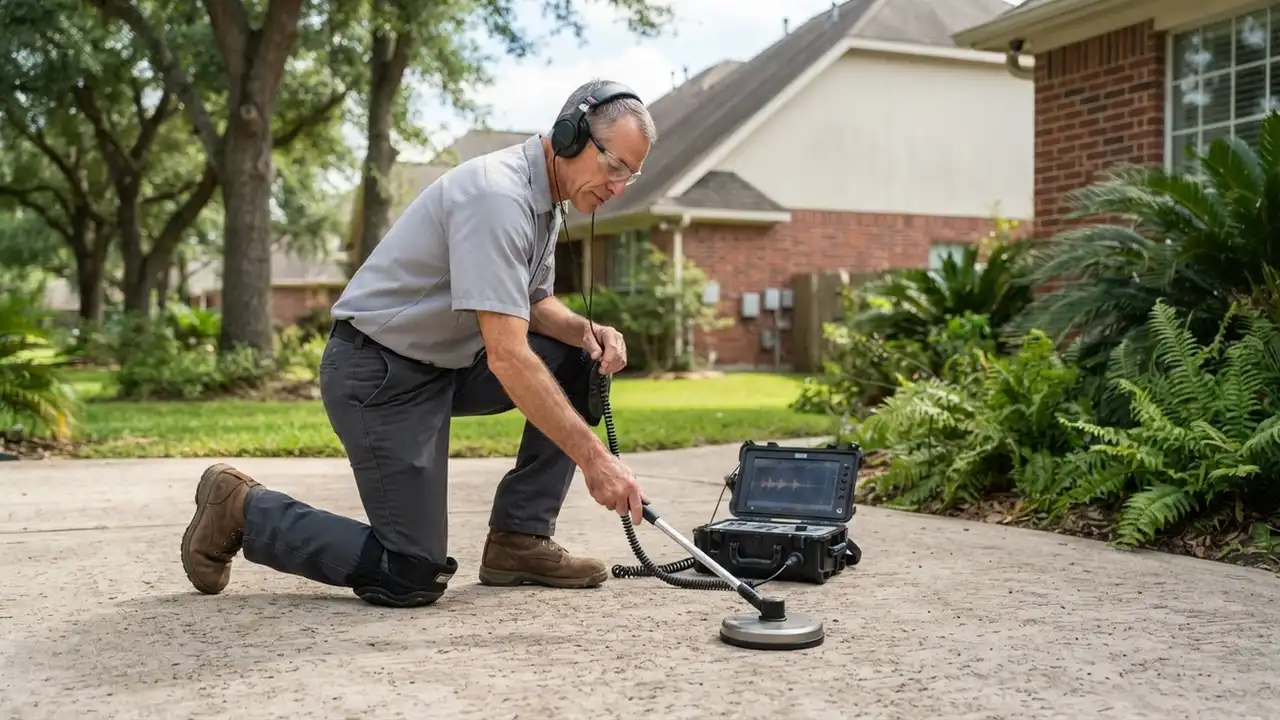 Slab Leak DetectionA drain leak under the slab and a pressurized supply leak can look identical from above. We test both systems to confirm which line failed before we open concrete, saving you from a repair on the wrong pipe.Explore →
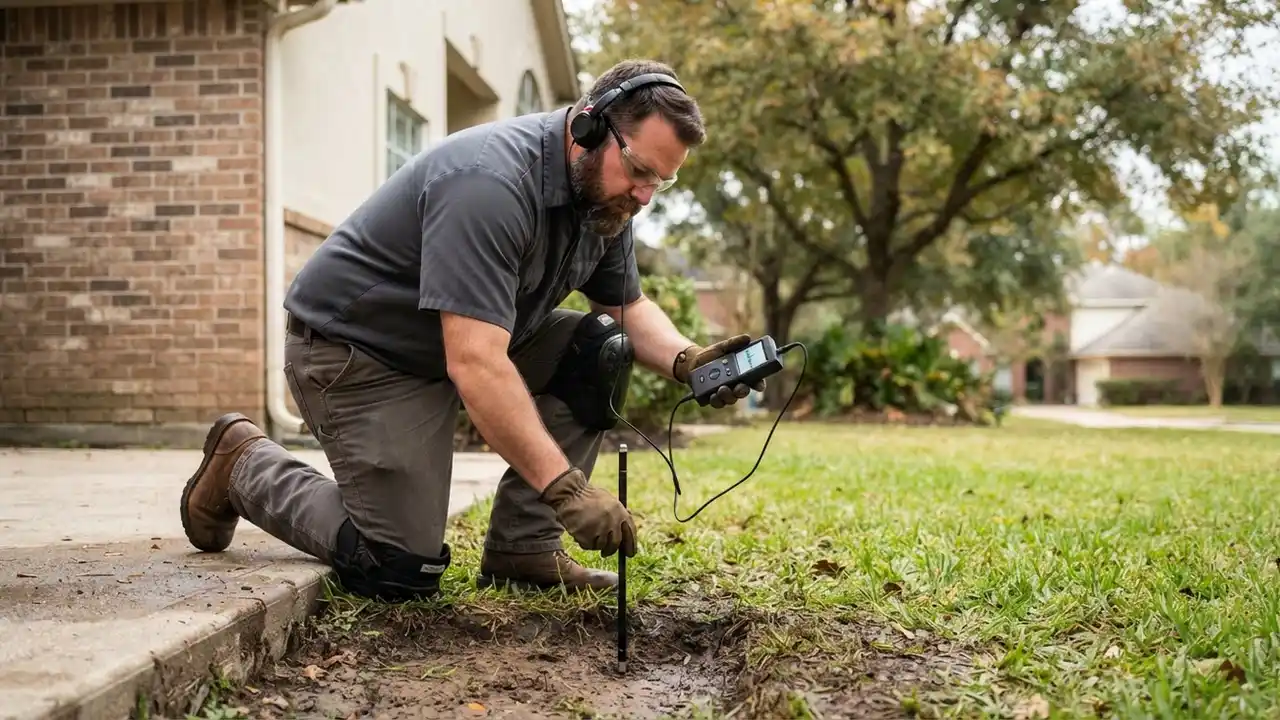 Foundation Leak DetectionDrain leaks saturate the soil under your foundation and cause movement. We locate the drain leak first, then check whether foundation movement has already started so you can address both issues in the right order.Explore →
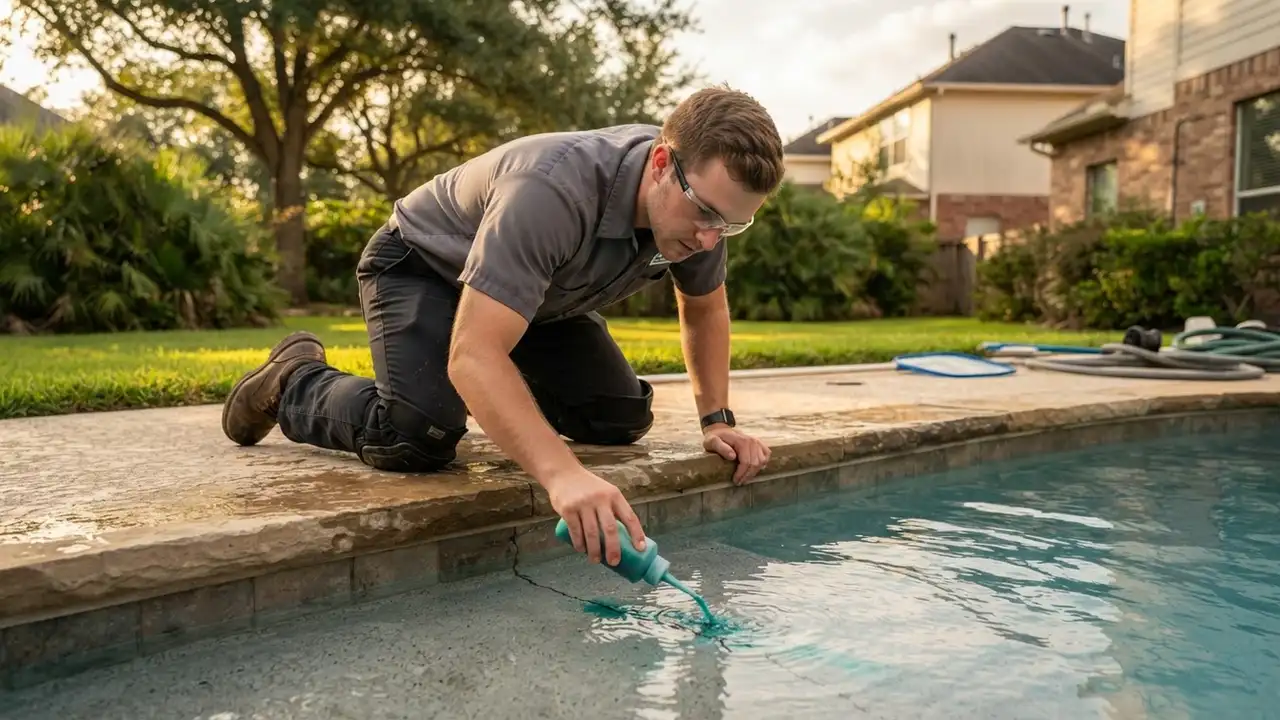 Pool Leak DetectionPool plumbing and household drain lines are separate systems, but both can leak into the same saturated soil. If you have a wet spot between the pool and the house, we test both to find the true source.Explore →
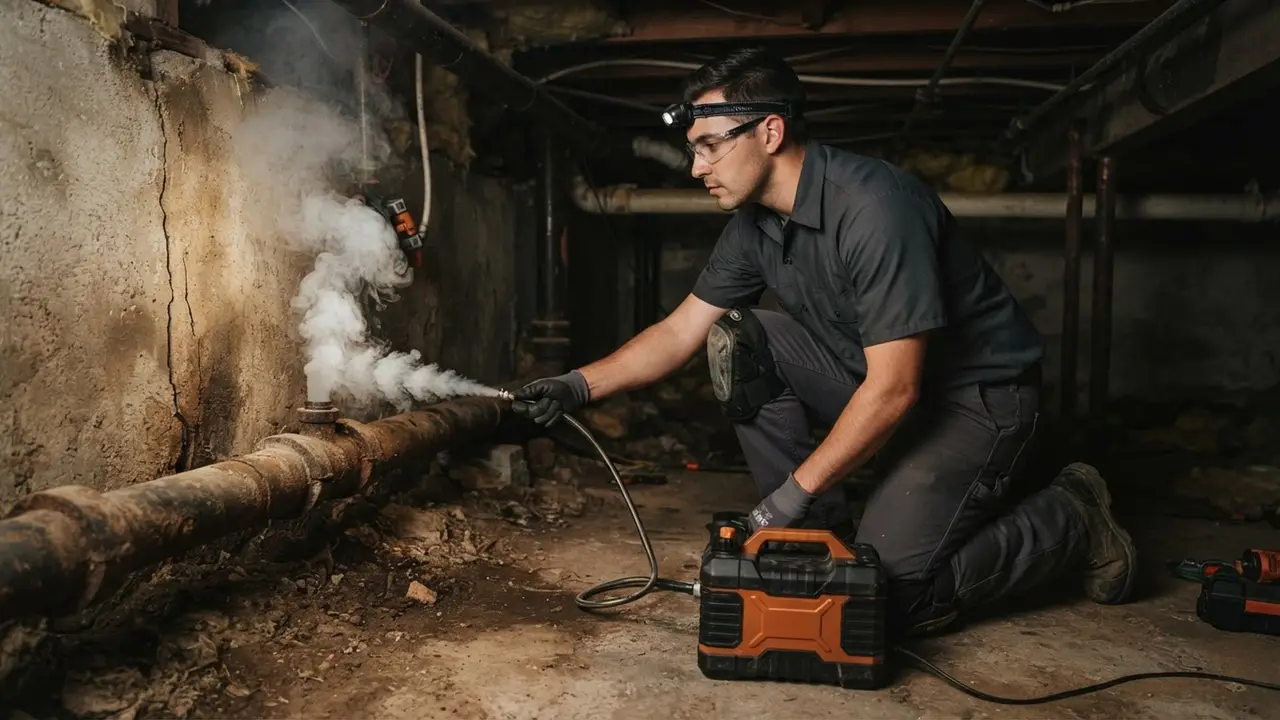 Sewer Line Leak DetectionA drain leak near the main line can be a sewer line failure. We camera the line to check for root intrusion, collapsed pipe, or separated joints before recommending a spot repair or a larger sewer fix.Explore →
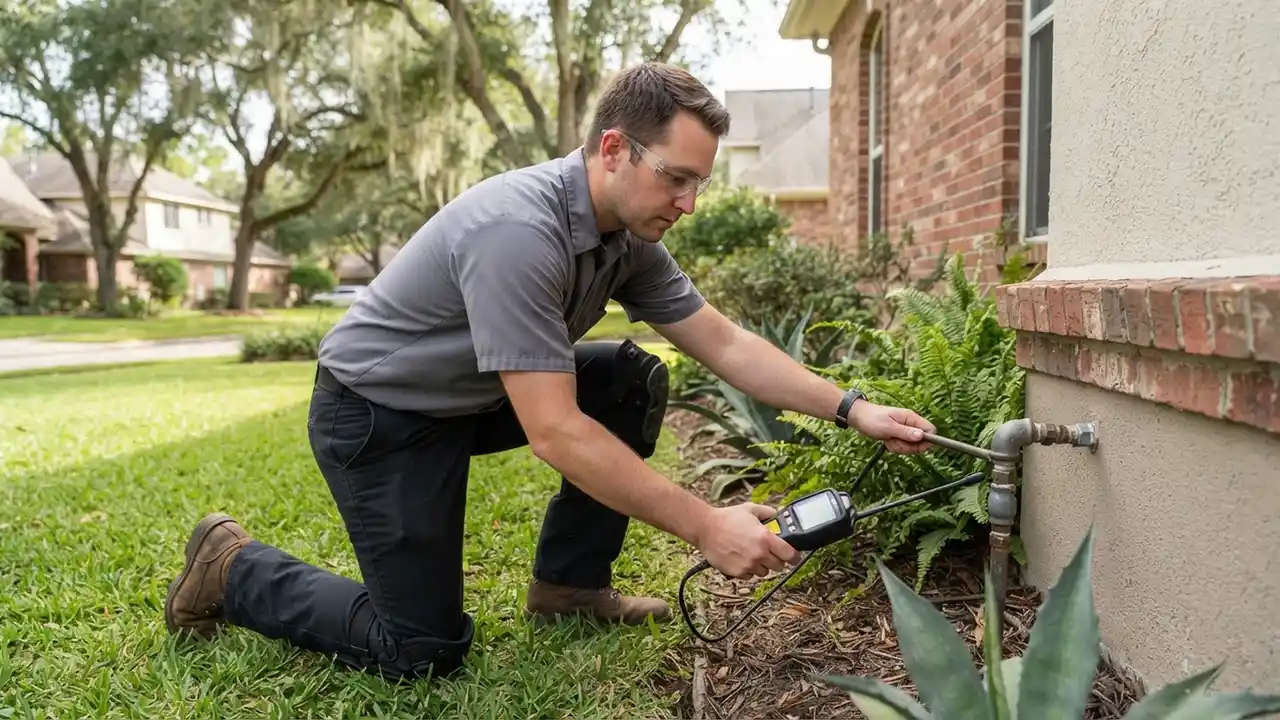 Gas Leak DetectionSome Houston homes have gas lines running in the same trenches as drain lines. When we open a floor for drain repair, we can verify nearby gas lines are sound with a tracer gas detector and pressure testing gauge.Explore →
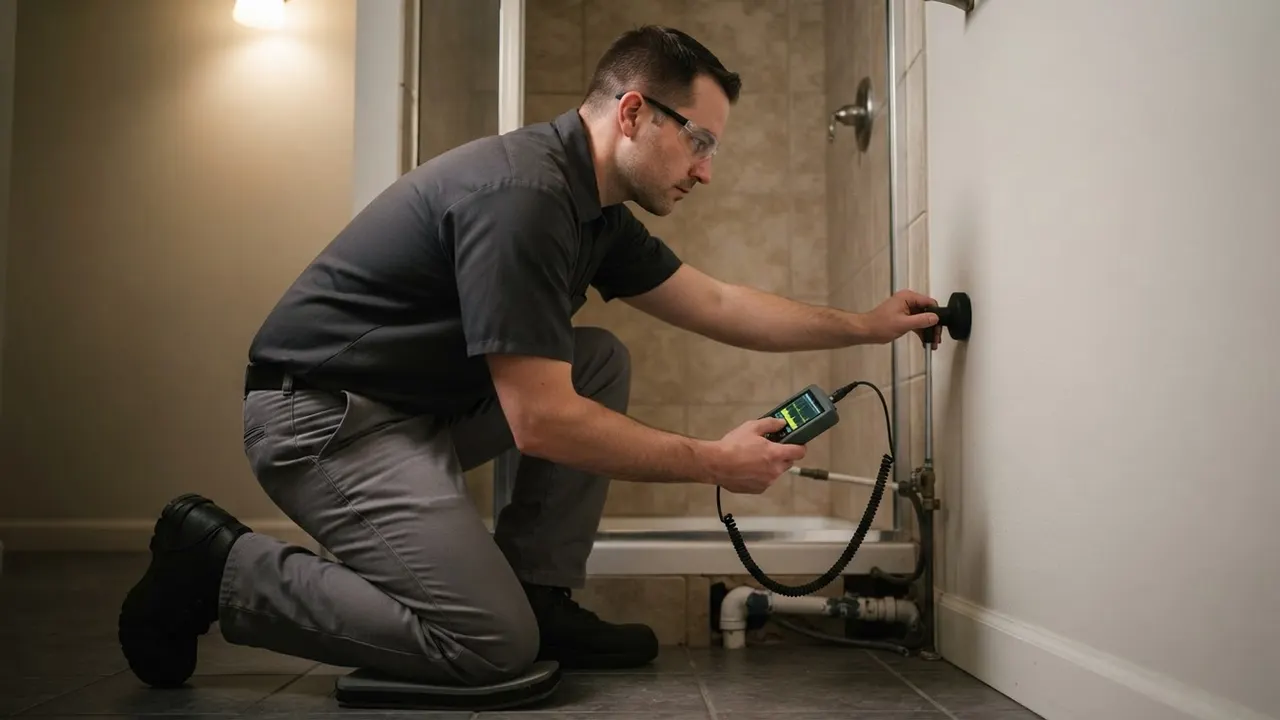 Plumbing Leak DetectionDrain leaks are one part of the plumbing system. If you are not sure whether the leak is drain, supply, or fixture, we test the whole system and isolate the failure before any repair begins.Explore →
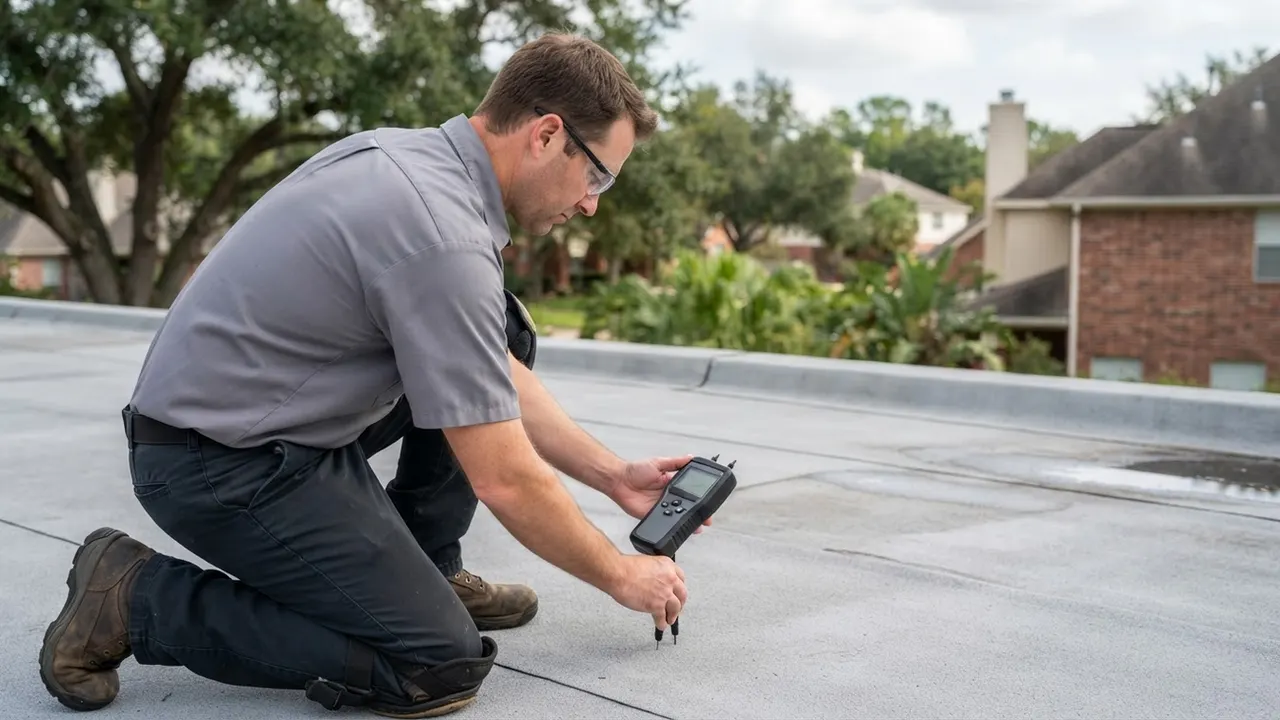 Roof Leak DetectionWater stains on a ceiling can come from a roof leak or a drain line running through the attic. We test the drain line first, because a drain leak misdiagnosed as a roof leak leads to unnecessary roofing work.Explore →
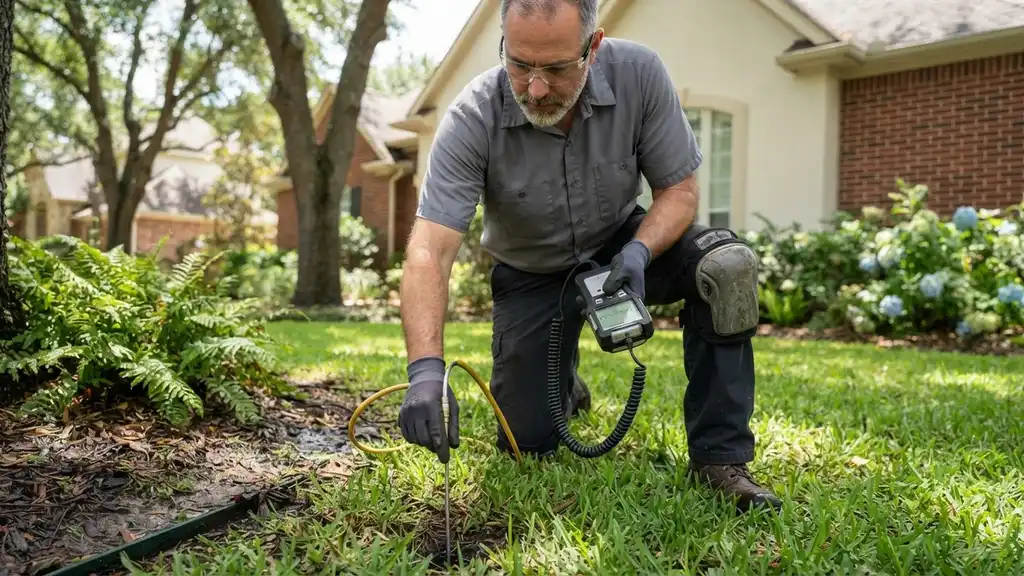 Irrigation System Leak DetectionIrrigation lines run close to foundation drain lines in many Houston yards. A wet spot near the house could be either system. We isolate and test both so the repair targets the right pipe.Explore →
A drain leak gets worse every day you wait. Call Leak Detection The Heights at 832-839-4984 and we will schedule a licensed technician to find and fix the leak. Same-day appointments available, 24/7 emergency response.
Schedule Service 8328394984 →Call us at 832-839-4984 or send an email and we will get back to you fast. We answer the phone 24/7 for emergencies and schedule standard detections same day or next day across Houston and Harris County. Tell us what you are seeing and we will give you a flat detection price over the phone.