Preparing your Houston pipes for a freeze and leak season
Houston pipes freeze when temperatures drop below 20°F for a few hours. Here's how to winterize, insulate, and protect your home before the next hard freeze hits.
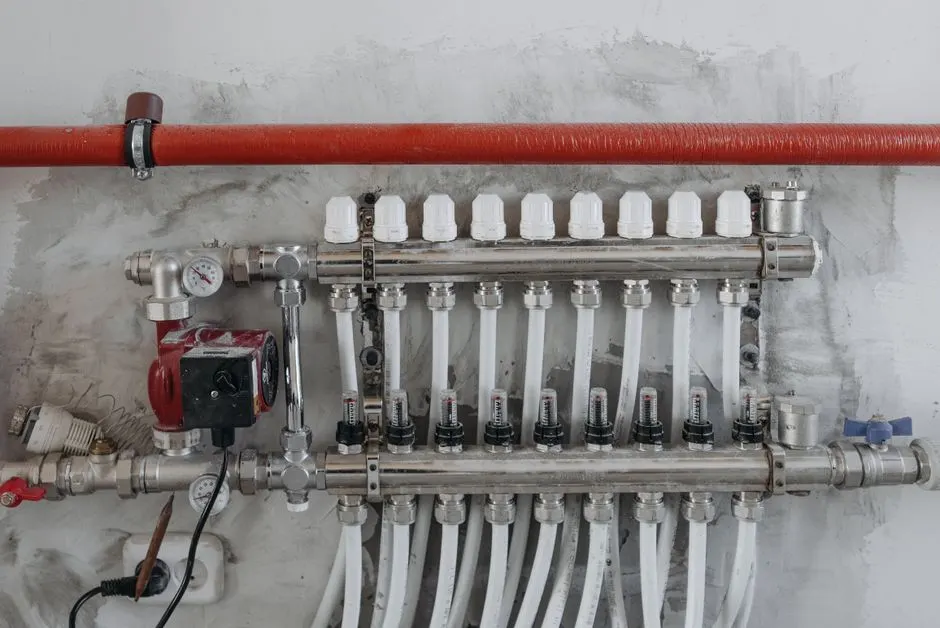
Houston pipes freeze when outdoor temperatures drop below 20°F for four or more hours, and they burst most often after the thaw, not during the freeze itself. Preparing Houston pipes for freeze and leak season TX means insulating exposed lines, dripping faucets, disconnecting hoses, and knowing where your main shutoff valve is before the first hard freeze arrives. This guide covers the exact steps we walk Houston homeowners through every November, plus what to do when a pipe does freeze and how to spot the leaks that follow.
Why Houston pipes freeze so easily
Houston homes are built for heat, not cold. Most of the housing stock here - especially the bungalows and mid-century ranches inside the Loop - has water lines running through uninsulated attics, exterior walls, and pier-and-beam crawl spaces. Those lines sit in unconditioned space where the temperature tracks the outdoors within a few degrees.
Compare that to a Minneapolis house, where supply lines are buried deep inside insulated interior walls. A Houston pipe in an attic can hit 25°F on a night when the outdoor low is 28°F. Add a 15 mph north wind and the wind chill pushes the pipe surface lower still. That is why a single hard freeze in Houston produces thousands of burst-pipe calls while a colder night in Chicago produces almost none.
We see the same pattern every winter: the homes that flood are rarely the oldest ones. They are the ones with a recent attic renovation, a new hose bib, or a water heater relocated to the garage - anything that left a supply line exposed.
How to prepare your Houston pipes for a freeze in TX
Preparing Houston pipes for a freeze in TX takes about two hours on a Saturday and costs under $60 in materials for most homes. Do it before the first forecast low drops below 32°F, which in Houston usually means the first or second week of December.
- Find your main shutoff valve. It is usually at the street in a concrete box, or where the supply enters the house. Test it now - a valve that has not turned in ten years may snap when you need it most.
- Insulate every exposed pipe. Foam pipe sleeves cost $1.50 to $3 per six-foot section at any Houston hardware store. Wrap attic runs, garage runs, and any line within 12 inches of an exterior wall.
- Seal the gaps around pipe penetrations. Expanding foam or caulk around the hole where a pipe passes through siding stops cold air from pouring in. A half-inch gap is enough to freeze a line.
- Disconnect every garden hose. A hose left connected traps water in the hose bib and splits the valve body. This is the single most common freeze repair we handle.
- Cover hose bibs and outdoor faucets. A $4 foam faucet cover does the job. A rolled-up towel and duct tape works in a pinch.
- Drain and stow outdoor equipment. Sprinkler systems, pressure washers, and pool pumps all hold water that expands when it freezes.
- Know which lines are most vulnerable. North-facing exterior walls, attic runs above the insulation, and any pipe in a pier-and-beam crawl space need the most attention.
If your home has a slab foundation - common in the Heights, Meyerland, and most of southwest Houston - the supply lines are under the slab and rarely freeze. Your risk is concentrated in the attic and exterior walls instead. We handle a lot of Slab Leak Detection Houston TX after freezes, but the leaks we find are usually in the attic drop lines feeding a bathroom, not the slab itself.
What temperature do pipes freeze in Houston Texas?
Water in an exposed Houston pipe freezes at 32°F, but the pipe does not burst at 32°F - it bursts when the ice expands and pressure builds between the ice plug and a closed faucet. That pressure can reach 2,000 psi, which is why a burst pipe can dump 8 to 10 gallons per minute into your attic or wall cavity.
The practical threshold for Houston homeowners is 20°F. At that temperature, an uninsulated attic line freezes within three to four hours. At 28°F, a well-insulated line in a heated wall is usually fine, but an exposed hose bib will still split. The National Weather Service issues a hard freeze warning for Houston when the low is forecast at 24°F or below for two consecutive hours.
Wind matters as much as temperature. A 20°F night with a 20 mph north wind will freeze a pipe faster than a still 15°F night, because moving air strips heat from the pipe surface. If your attic has ridge vents or gable vents - most Houston homes do - assume the attic temperature is within 5°F of the outdoor air.
Winterize outdoor pipes Houston TX
Winterizing outdoor pipes in Houston TX is mostly about removing water from anything that sits outside the conditioned envelope. The order matters: shut the supply off first, then drain, then protect.
- Sprinkler systems: Shut off the backflow preventer, open the test cocks, and blow the zones out with compressed air at 50 psi or less. A cracked backflow assembly runs $180 to $350 to replace.
- Pool equipment: Run the pump during freezes or drain the filter, heater, and pump housing. A frozen pool pump housing cracks and costs $400 to $900 to replace.
- Hose bibs: Disconnect the hose, then either install a foam cover or wrap the bib with insulation and plastic. A split hose bib is a $150 to $250 repair once you include the drywall work inside.
- Irrigation lines: If your system has a main shutoff inside the house, close it and open the lowest drain valve. If you are not sure where the shutoff is, we locate it during an Irrigation System Leak Detection Houston TX visit and mark it for you.
If you have a pool, the pump and filter are the two pieces most likely to crack. We get called out every January for Pool Leak Detection Houston TX on equipment pads where a freeze split a union or a filter housing. Ten minutes of draining prevents a four-figure repair.
Burst pipe prevention Houston: the two-hour rule
Burst pipe prevention in Houston comes down to one habit: during any hard freeze, open the cabinet doors under every sink on an exterior wall and let the faucets drip. A pencil-lead stream - about one drip per second - is enough to relieve pressure and keep water moving through the line.
Why cabinets? Because the cabinet interior is often 10°F colder than the room, and the supply lines run along the back wall. Opening the doors lets room air circulate. We have seen a $12,000 water damage claim from a kitchen sink line that froze behind closed cabinet doors during a 19°F night in a home that was otherwise well prepared.
Two more habits that prevent most burst pipes:
- Keep the thermostat at 68°F or higher, day and night, during a freeze. Do not set it back overnight. The $8 you save on gas is not worth a $3,000 drywall and flooring repair.
- Open attic access panels and let warm air rise. If your attic has a furnace or air handler up there, the heat from the unit keeps the attic above freezing - but only if the unit is running. During a power outage, open the attic hatch and let house heat rise.
If you leave town during a freeze, shut off the main water valve at the street and drain the lines by opening every faucet. That is the only reliable protection for an empty house.
What to do if pipes freeze in Houston TX
If a pipe freezes in Houston TX, shut off the main water valve first, then open the nearest faucet and warm the pipe slowly with a hair dryer, heat lamp, or space heater - never with an open flame. A propane torch on a copper line will melt the solder joint and start a fire inside the wall.
Here is the sequence we recommend:
- Shut off the main valve. This limits the flood if the pipe has already split.
- Open the faucet nearest the frozen section. As the ice melts, water and steam will escape and tell you when flow returns.
- Warm the pipe from the faucet end back toward the freeze. Work slowly. A hair dryer on high moves about 1,200 watts of heat and will thaw a 10-foot section in 15 to 25 minutes.
- Watch for leaks as it thaws. Most burst pipes leak only after the ice plug melts. If you see water running inside a wall or ceiling, shut the valve and call us.
If you cannot find the frozen section, or if the pipe is inside a slab or behind tile, stop and call a professional. We use Thermal Imaging Leak Detection Houston TX to find the freeze point without opening walls, and Acoustic Leak Detection Houston TX to confirm whether the pipe has already split.
Common mistakes that cause freeze leaks
The freeze leaks we repair in Houston almost always trace back to one of five mistakes. None of them are exotic - they are the same errors we see in Heights bungalows, Katy new builds, and Pearland two-stories alike.
- Leaving the hose connected. The hose traps water in the bib. The bib splits. The wall behind it gets wet. This is the number one cause of freeze damage we see.
- Insulating the pipe but not the gap. Foam sleeves on the pipe do nothing if cold air is pouring through the hole around it. Seal the penetration first, then insulate.
- Turning the heat down at night. A 60°F overnight setting is fine in July. In a freeze, it is the difference between a dry house and a wet one.
- Using an open flame to thaw a pipe. Every year, Houston Fire Department responds to attic fires started by torches and heat guns used on frozen lines. Use a hair dryer.
- Ignoring the attic. If your supply lines run through the attic - and in most Houston homes they do - that is where the freeze happens. Insulate those runs before anything else.
One more: do not assume a newer home is safe. We regularly find uninsulated attic lines in homes built after 2015, because the code does not require insulation on attic supply lines in Houston's climate zone. The builder is not required to protect you from a 20°F night. You are.
When to call a professional
Call a professional when you cannot find the frozen section, when a pipe has already burst, or when you see water staining on a ceiling or wall after a freeze. Those are the three situations where a DIY thaw turns into a $5,000 repair.
We find the leak, fix it, and test the line before we leave. For freeze damage, that usually means locating the split with thermal imaging, opening the smallest possible access, repairing the pipe, and pressure-testing the line to confirm it holds. If the leak is inside a wall or under a slab, we use Concealed Leak Detection Houston TX to pinpoint it before anyone picks up a saw.
We also handle the leaks that show up weeks after a freeze. A pipe that froze and split but did not leak immediately will often start weeping once the ice clears and normal pressure returns. If your water bill jumps 2,000 gallons in a month with no change in habits, that is a leak - and it is often freeze-related. Leak Detection Houston TX is what we do, and we can usually get to a freeze-related leak the same day.
Frequently Asked Questions
How do I prepare my pipes for a freeze in Houston TX?
Insulate exposed attic and exterior-wall lines, disconnect hoses, cover hose bibs, seal pipe penetrations, and know where your main shutoff valve is. During the freeze, drip faucets on exterior walls and keep the thermostat at 68°F or higher. Two hours of prep prevents most freeze damage.
What temperature do pipes freeze in Houston Texas?
Water freezes at 32°F, but exposed Houston pipes freeze solid within three to four hours at 20°F. A hard freeze warning is issued at 24°F or below. Wind accelerates freezing, so a 20°F night with wind is worse than a still 15°F night.
Who fixes burst pipes in Houston TX?
A licensed plumbing contractor handles burst pipe repair. We locate the split, repair or replace the section, and pressure-test the line. Most freeze-related burst pipe repairs in Houston run $350 to $1,200 depending on access and pipe material.
Does homeowners insurance cover frozen pipe leaks in Houston TX?
Most Houston homeowners policies cover sudden water damage from a burst pipe, typically after a $1,000 to $2,500 deductible. They usually do not cover the pipe repair itself or damage from a freeze in an unheated structure. Document the damage before cleanup and call your insurer first.
How much does it cost to winterize pipes in Houston?
DIY winterizing costs $40 to $80 in insulation and foam covers. A professional winterization - including sprinkler blowout, hose bib covers, and attic line insulation - runs $250 to $600 in 2026, depending on attic access and square footage.
Get help with Leak Detection in Houston
If a freeze has already hit and you are seeing water where it should not be, we can find the source and stop the damage. Call Leak Detection The Heights at 832-839-4984 and we will get a technician out to locate the leak, repair the line, and confirm it holds before we leave.